
Quick Answer
Gaming chairs often get bad reviews because of comfort problems, weak materials, unstable parts, poor sizing, shipping damage, and limited after-sales support. For B2B buyers, these complaints are more than consumer opinions. They are early warning signs before placing bulk orders.
The full guide below explains the most common gaming chair quality issues and gives buyers a practical checklist for comparing suppliers, samples, packaging, and inspection standards before confirming mass production.
Why Consumer Complaints Matter for B2B Gaming Chair Buyers
For importers, distributors, online sellers, and private-label furniture brands, consumer complaints are not just a customer service problem. They affect product ratings, return rates, warranty cost, marketplace ranking, and repeat-order confidence.
Many buyers compare wholesale gaming chairs mainly by appearance and FOB price. That is risky. A chair can look attractive in product photos but still create complaints after customers sit on it for several weeks.
The most common bad reviews usually come from a few areas: poor lumbar support, seat cushion discomfort, PU leather peeling, armrest wobble, gas lift sinking, wrong size fit, weak export packaging, and missing spare parts. For B2B buyers, these issues should become a pre-shipment quality checklist.
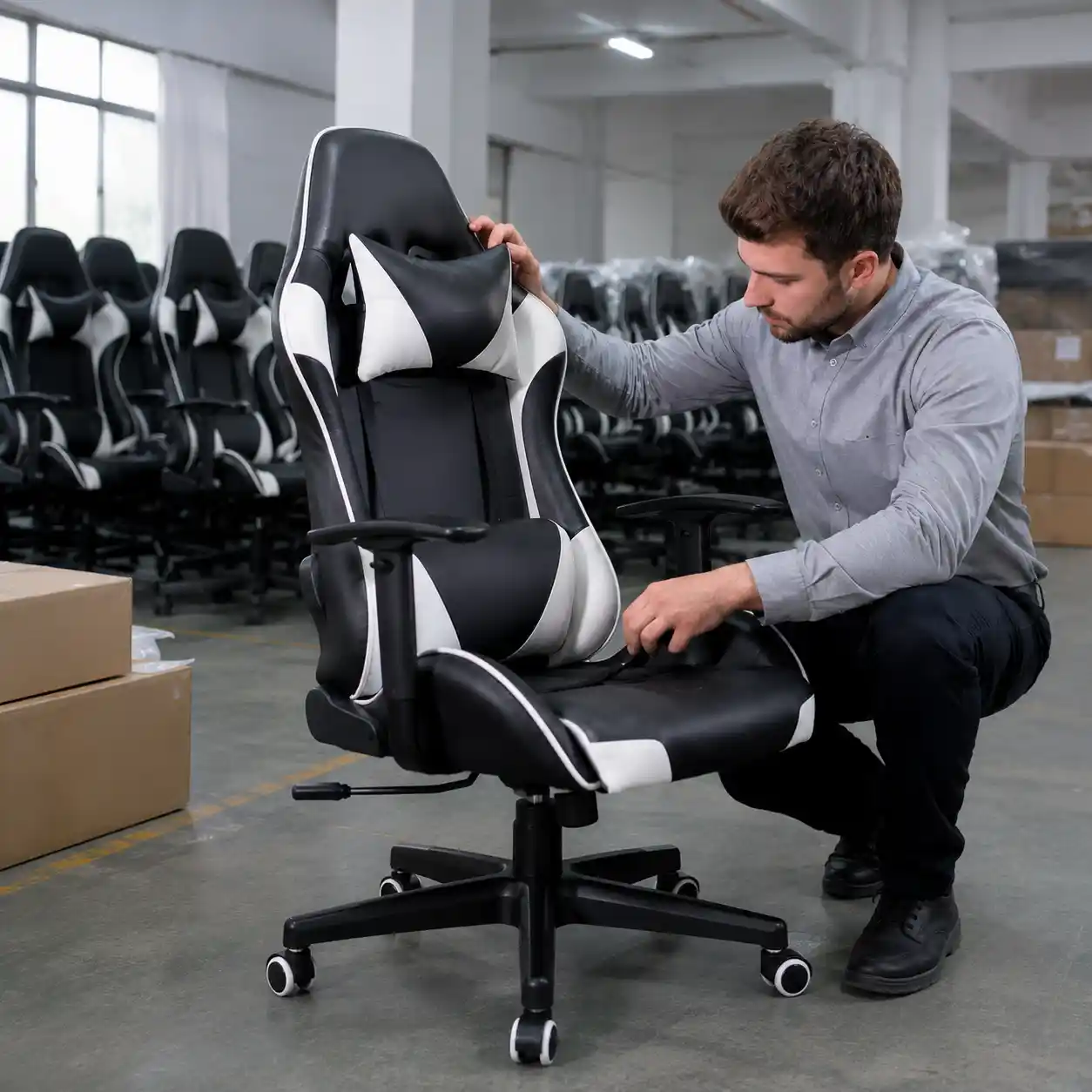
1. Back Pain and Poor Lumbar Support
One of the most common gaming chair complaints is back pain. Some users say the chair looks supportive but feels uncomfortable during long sitting. This often happens when the backrest shape, lumbar pillow position, seat angle, or foam support does not match real sitting habits.
A racing-style backrest is not automatically ergonomic. A chair can have a sporty design but still fail to support the lower back properly.
B2B buyers should check backrest height, backrest curve, lumbar pillow position, seat-to-back angle, foam firmness, and sitting comfort after 30 to 60 minutes. If customers use the chair for long gaming or home office sessions, comfort testing should happen before bulk orders, not after complaints arrive.
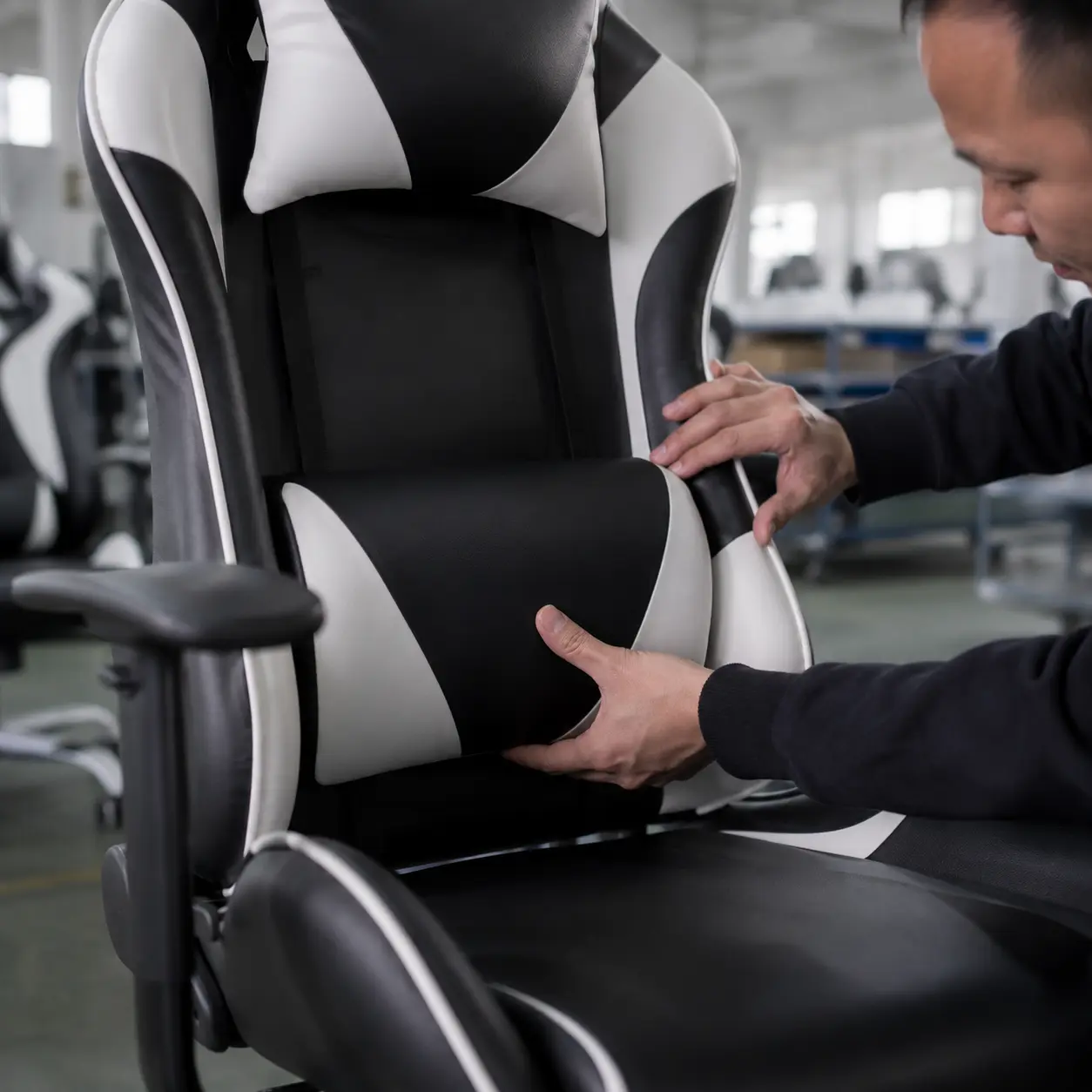
2. Seat Cushion Too Hard, Too Thin, or Easy to Collapse
Another common issue is seat cushion discomfort. Some gaming chairs feel fine for the first few minutes but become painful after longer use. This can come from low foam density, thin cushion thickness, poor rebound, or inconsistent foam between sample and mass production.
For online sellers, this is dangerous because customers may leave reviews such as “too hard”, “not comfortable”, or “seat flattened quickly”.
B2B buyers should ask the supplier about foam type, foam thickness, foam density, rebound performance, sample consistency, long-sitting comfort, and cushion shape after compression. For budget models, buyers can accept simpler materials, but the comfort expectation should still match the target market.
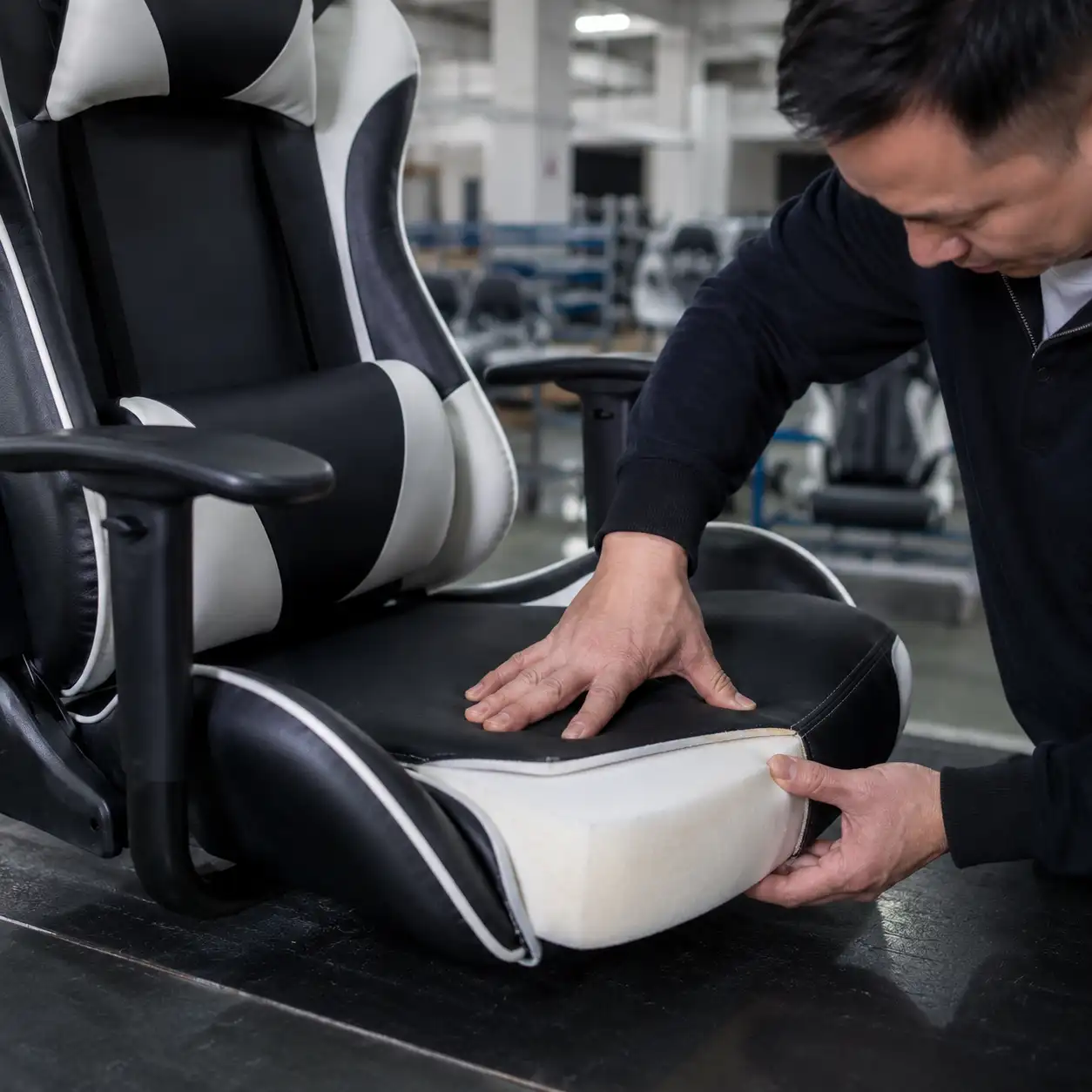
3. PU Leather Peeling, Cracking, or Feeling Too Hot
PU leather is widely used in gaming chairs because it looks clean, photographs well, and is easy to wipe. But many bad reviews mention peeling, cracking, surface damage, or heat discomfort.
This problem may come from low-grade PU, weak surface coating, poor stitching, sweat exposure, friction during shipping, or unsuitable material choice for hot markets.
Before confirming bulk gaming chairs, buyers should check PU leather thickness, surface feel, abrasion resistance, stitching tension, color consistency, odor level, heat resistance, sweat resistance, and packaging protection for leather surfaces.
For hot climates or long-session users, fabric options may be worth considering. For e-commerce, PU leather can still work well, but the supplier must control material quality and packing protection.
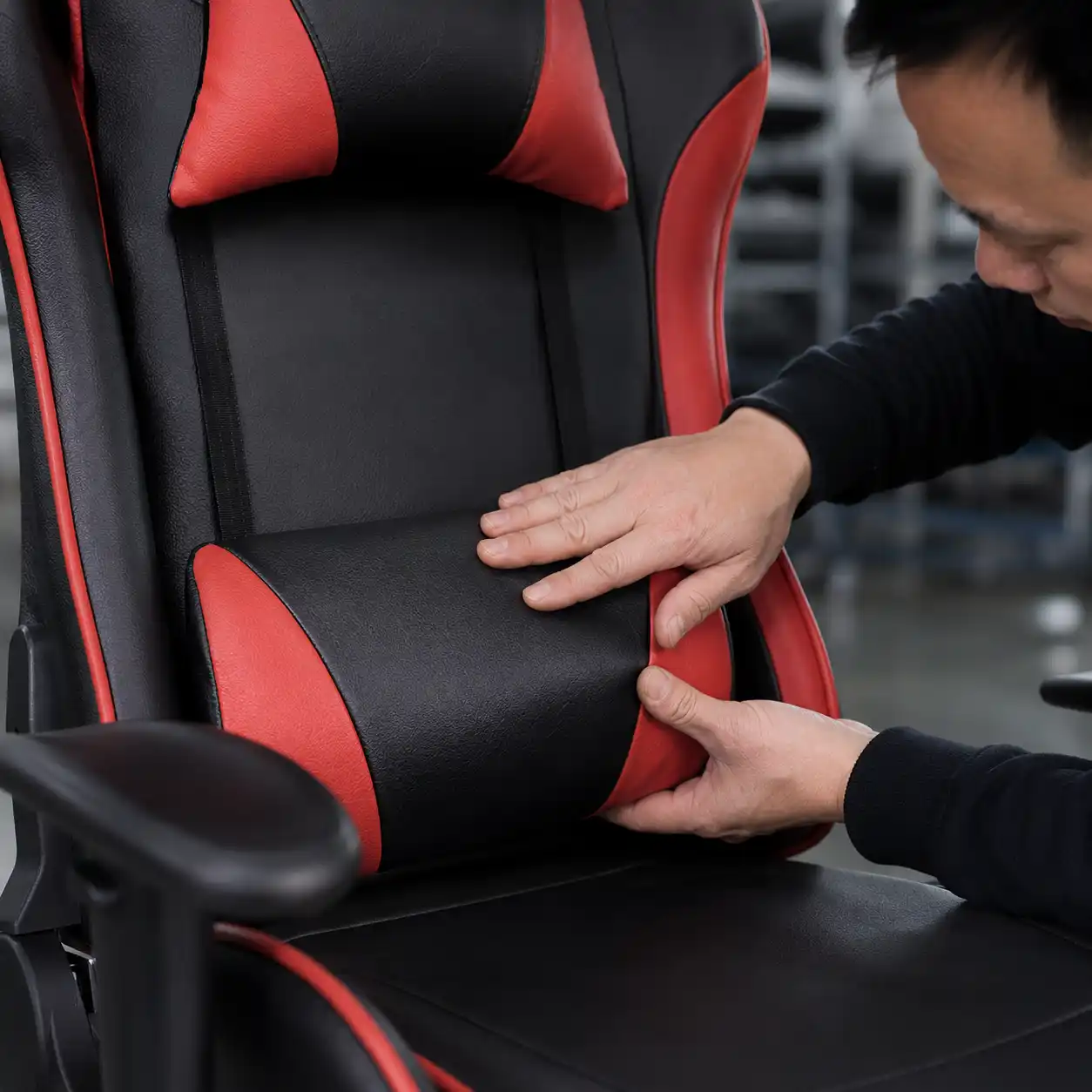
4. Armrest Wobble and Poor Adjustment
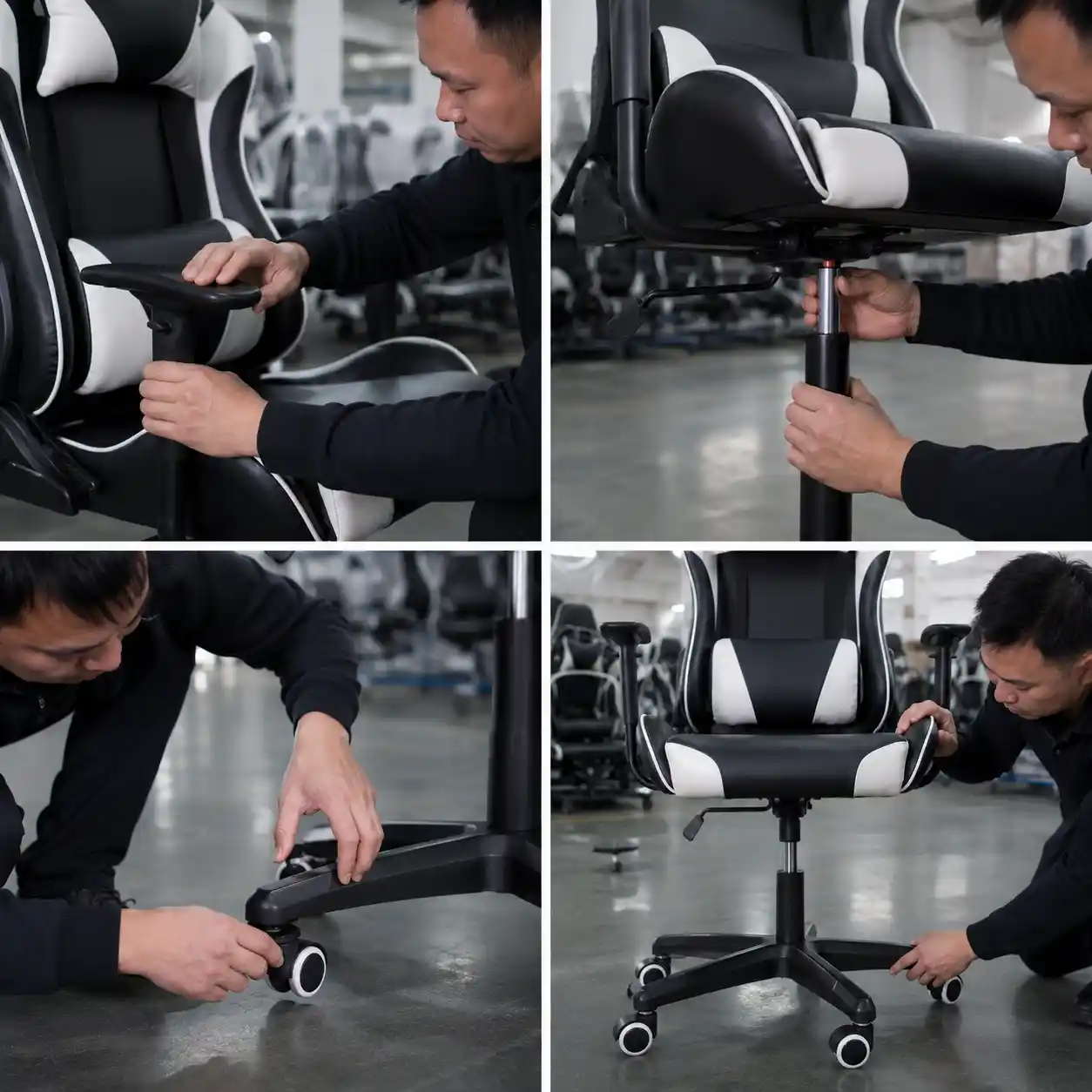
Many consumers complain about loose or wobbly armrests. This may happen with fixed armrests, linkage armrests, 2D armrests, 3D armrests, or 4D armrests if the structure is not stable.
A more adjustable armrest is not always better. If the adjustment parts are loose, buyers may face higher return rates even when the product looks more advanced.
B2B buyers should inspect armrest type, screw hole accuracy, assembly tightness, adjustment smoothness, side-to-side movement, long-term stability after repeated use, and the difference between sample and bulk production. This is especially important for private-label programs because a small wobble can quickly become a repeated customer complaint.
5. Gas Lift Sinking and Unstable Mechanism
Another common gaming chair quality issue is the chair slowly sinking after sitting. Users may describe it as “gaming chair keeps sinking” or “gas lift not holding height”.
This is usually related to gas lift quality, load rating, mechanism compatibility, or installation accuracy. The reclining and tilt mechanism can also create complaints if it feels loose, noisy, or unsafe.
B2B buyers should confirm gas lift grade, height adjustment range, load testing standard, mechanism type, recline angle, locking function, tilt stability, and approved sample status before mass production.
For buyers comparing a reclining gaming chair, the mechanism should be tested repeatedly. Function problems are hard to fix after shipment.
6. Poor Size Fit for Different Body Types
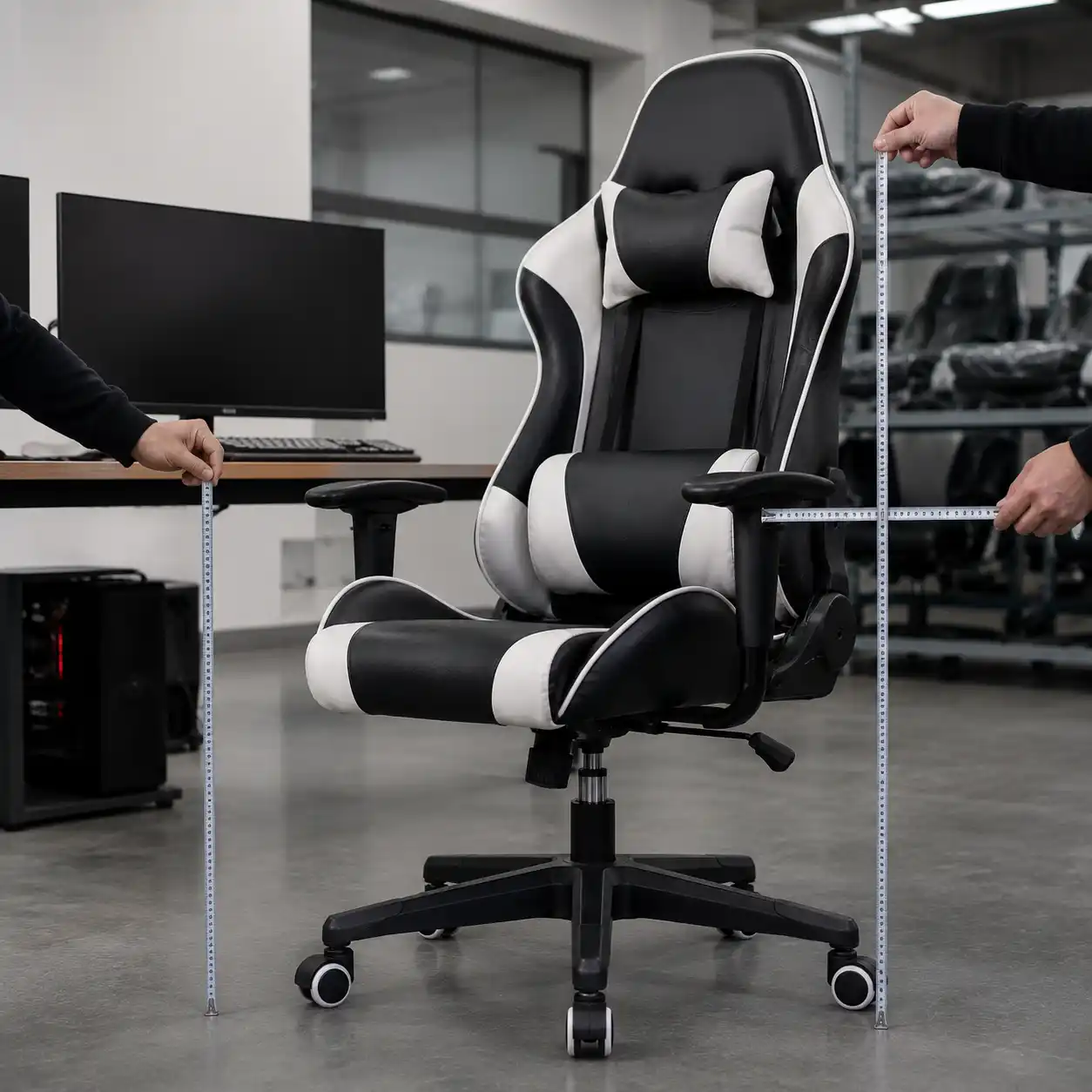
Some gaming chairs get bad reviews because they do not fit the user’s body size. A seat may be too narrow, the side wings may press the legs, the backrest may be too short, or the weight capacity may not match customer expectations.
This problem is often caused by selling one chair as if it fits everyone. B2B buyers should check seat width, seat depth, backrest height, side wing design, recommended user height, recommended user weight, armrest height range, and market body-size expectations.
If your target customers include larger users, choose models with wider seats and stronger structure. If your market is budget retail, avoid overpromising comfort or size range in product descriptions.
7. Weak Packaging and Shipping Damage
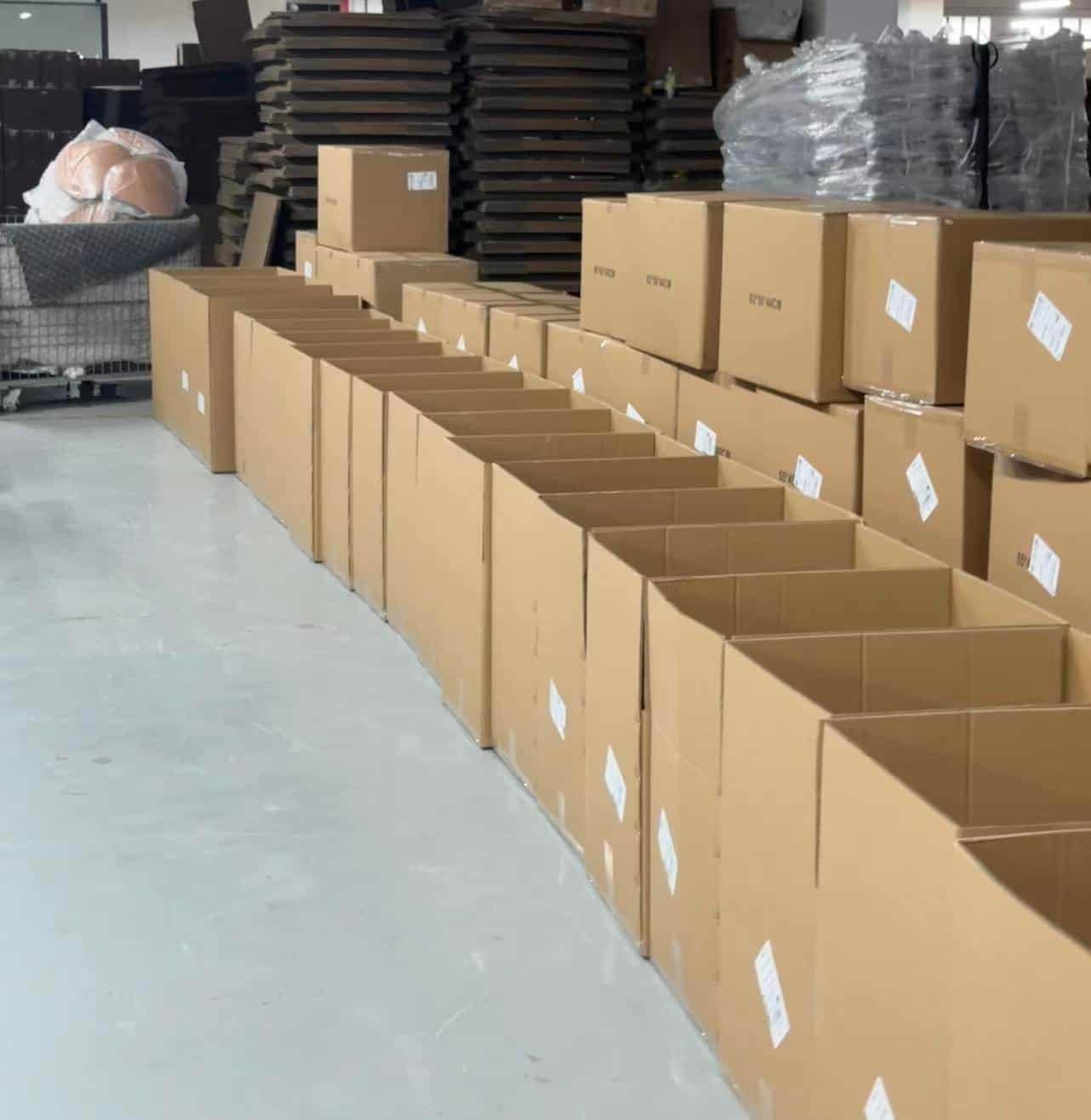
Gaming chairs include heavy parts: base, mechanism, gas lift, wheels, armrests, backrest, and screw packs. If packing is weak, customers may receive scratched parts, damaged cartons, missing accessories, or broken components.
For B2B buyers, packaging is not a minor detail. It directly affects landed cost and after-sales claims.
Check the supplier’s packaging plan, including outer carton strength, inner protection, separate packing for metal parts, protection for PU leather surfaces, screw pack completeness, user manual clarity, carton marks, drop-test requirements, and 20GP or 40HQ loading data.
If you sell through e-commerce channels, carton damage can hurt customer trust before the chair is even assembled.
8. Missing Spare Parts and Poor After-Sales Support
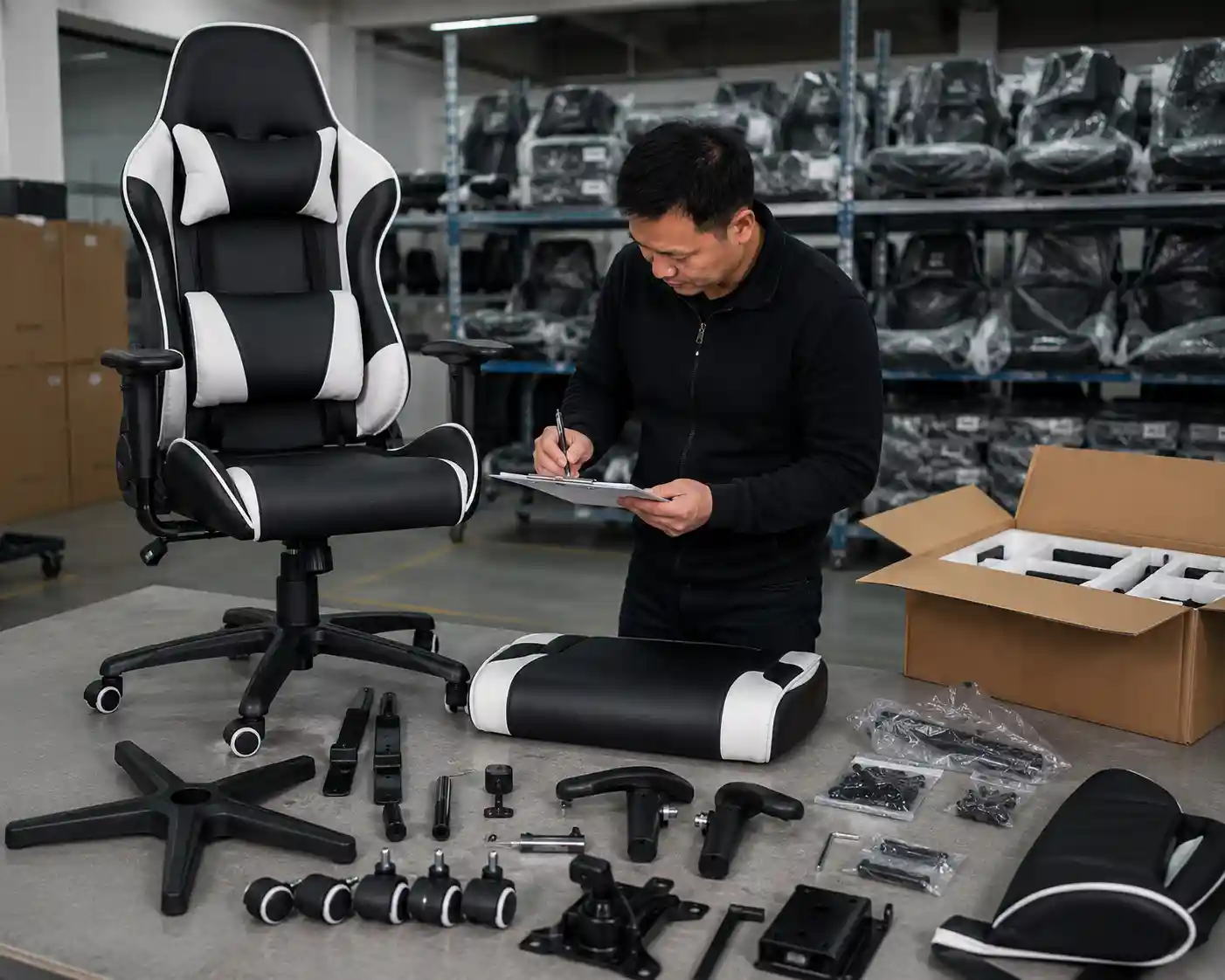
Some gaming chair complaints are not only about product failure. They are about slow replacement parts or poor after-sales support. Missing screws, broken casters, damaged pillows, or defective armrests can become serious problems when no spare parts are available.
A reliable gaming chair factory should discuss spare parts before shipment.
Useful spare parts include gas lifts, mechanisms, armrests, castors, bases, screws, tools, head pillows, lumbar pillows, and replacement covers. For distributors and private-label brands, spare parts support can reduce refund costs and protect long-term customer relationships.
Turn complaints into product checks: Buyers can compare FT-7009 professional gaming chair, YG-7138 split-footrest gaming chair, and YG-7160 OEM gaming chair with footrest when reviewing armrests, recline, gas lift, upholstery, packing, and spare parts.
B2B Quality Checklist Before Ordering Gaming Chairs
| Consumer Complaint | Possible Product Cause | What B2B Buyers Should Check |
| Back pain | Poor lumbar support | Backrest angle, pillow position, sitting test |
| Seat discomfort | Low foam density | Foam thickness, rebound, sample consistency |
| PU peeling | Weak surface material | PU thickness, abrasion resistance, packing protection |
| Armrest wobble | Loose structure | Armrest type, screw fit, adjustment stability |
| Chair sinking | Weak gas lift | Gas lift grade, load testing, height function |
| Poor size fit | Wrong dimensions | Seat width, backrest height, target user size |
| Shipping damage | Weak carton | Inner protection, carton strength, accessory packing |
| After-sales issues | No spare parts | Spare parts policy, replacement parts, warranty support |
How B2B Buyers Can Reduce Bad Reviews Before Shipment
Bad reviews are not random. Most of them are connected to decisions made before mass production.
Before ordering, buyers should request samples, test comfort for real sitting time, confirm material samples, check gas lift and mechanism specifications, inspect armrest stability, confirm packaging method, review carton size and loading quantity, prepare an inspection checklist, and confirm spare parts support.
If you are building a product line, compare multiple models, not only one price. A supplier who can explain structure, material, packaging, and QC details is usually safer than a supplier who only quotes quickly.
For buyers looking at different price levels, compare entry models such as budget gaming chairs with more adjustable models such as professional gaming chairs. This helps match the chair to the correct customer group.
For comfort-led wholesale programs, compare the YG-7166 ergonomic gaming chair with footrest and the YG-7169 reclining gaming chair with footrest to review support, reclining, packing, and buyer-fit differences.
Buyer Action: Reduce Quality Risk Before Bulk Orders
If bad reviews, return claims, or unstable comfort are your main concerns, use this checklist together with our gaming chair category page. Compare sample chairs by lumbar support, sponge density, armrest stability, gas lift quality, upholstery, carton strength, and spare parts support.
- FT-055D professional gaming chair for balanced wholesale positioning
- YG-7166 ergonomic gaming chair with footrest for comfort-focused retail
- YG-7169 reclining gaming chair with footrest for higher-feature programs
Apply this checklist to real models: Compare FT-088 ergonomic gaming chair, YG-7170 game chair with footrest, and YG-7169 reclining gaming chair with footrest for different B2B price and comfort levels.
Use the checklist on actual products: Review FT-511 red gaming chair for eSports retail orders, FT-1206 ergonomic gaming chair, and FT-1209 reclining gaming chair when checking recline, foam, armrests, upholstery and carton protection.
Final Recommendation
Buyers comparing real models can review FT-055 ergonomic gaming chair, FT-1206 ergonomic PC gaming chair, YG-7166 ergonomic gaming chair with footrest, and YG-7138 split footrest gaming chair.
Gaming chair bad reviews reveal what B2B buyers should inspect before bulk orders. Comfort, PU leather quality, armrest stability, gas lift performance, size fit, packaging, and spare parts support all affect customer satisfaction.
For importers, distributors, e-commerce sellers, and private-label brands, the goal is not only to buy a good-looking chair. The goal is to reduce return risk, protect customer reviews, and build a repeatable product line.
If you are comparing suppliers, treat consumer complaints as a quality control checklist. The more issues you solve before shipment, the fewer problems your customers will report after delivery.
Next step: Use this quality checklist while comparing models in the wholesale gaming chair category or read the wholesale gaming chair buying guide for supplier selection.
Related buyer path: After reading the quality checklist, compare gas lift sinking checks, YG-7138 footrest gaming chair, YG-7160 OEM gaming chair with footrest, and FT-7009 professional gaming chair.
FAQ
Why do gaming chairs get bad reviews?
Gaming chairs often get bad reviews because of back pain, hard cushions, peeling PU leather, loose armrests, sinking gas lifts, poor size fit, weak packaging, or missing spare parts.
Why are some gaming chairs uncomfortable?
Some gaming chairs are uncomfortable because the backrest angle, lumbar support, seat cushion, side wings, or foam density do not match long sitting needs.
What causes PU leather gaming chairs to peel?
PU leather may peel because of low-grade surface material, sweat, heat, friction, weak coating, poor cleaning, or insufficient protection during shipping.
Why does a gaming chair keep sinking?
A gaming chair may keep sinking because of a weak gas lift, poor mechanism compatibility, overloaded use, or low-quality height adjustment components.
What should B2B buyers check before ordering wholesale gaming chairs?
B2B buyers should check lumbar support, seat cushion density, frame strength, gas lift grade, armrest stability, reclining mechanism, upholstery durability, packing strength, spare parts, and sample consistency. For model comparison, start from the gaming chair category page and shortlist models by market positioning.
How can suppliers reduce gaming chair return rates?
Suppliers can reduce return rates by using stable materials, confirming real dimensions, testing the gas lift and mechanism, improving carton protection, providing spare parts, and keeping sample quality consistent with mass production. For B2B buyers, models such as YG-7169 reclining gaming chair with footrest should be checked carefully for comfort and function before bulk orders.
Choose the Right Follow-Up Check
A complaint category should lead to a specific review step. Use the gaming chair back-pain complaint guide for fit and long-sitting questions, the dynamic lumbar support guide for mechanism claims, and the gas lift sinking checks when height adjustment is the concern. This keeps sample approval focused on the actual return risk rather than a generic feature list.
Use Project Cases as a Practical Reference
Product complaints should lead to a model-specific sample and production check. For context, review the disclosed 400-unit FT-055D gaming chair project for Spain and the 400-unit FT-511 project for Mexico. They are sourcing references, not a substitute for confirming the current model specification, approved sample, packing plan, inspection scope, and destination-market requirements for a new order.
Model-level follow-up: After identifying a likely complaint risk, compare the wholesale gaming chair range and move the issue into the selected model’s approval record. FT-7009 fits venue and distributor comparisons, while FT-055D is a useful OEM/ODM reference.
 English
 Español