
Quick answer: if buyers ask why do gaming chair gas lifts sink, the usual causes are pressure loss inside the pneumatic cylinder, worn internal seals, a height lever that keeps touching the valve pin, or a gas lift that is not strong enough for real daily load. For one consumer, this feels like an annoying chair repair. For B2B buyers, it can become a return problem across a whole batch.
That is why this article is not written as a simple repair trick. If you import, distribute, or private-label wholesale gaming chairs, a sinking gas lift is a quality-control signal. Before confirming bulk orders, buyers should check gas lift grade, mechanism matching, seat structure, load testing, packing protection, and spare parts support.
Why a Sinking Gaming Chair Becomes a B2B Problem
End users describe the problem in plain language: the chair keeps lowering, the seat will not stay up, or the chair randomly drops during use. They usually do not know whether the problem comes from the cylinder, the valve, the lever, or the seat mechanism. They only know the chair feels cheap.
For buyers, this is where the risk starts. A gas lift failure is not only a functional defect. It can damage reviews, increase spare-parts requests, create warranty claims, and make a gaming chair line look unreliable even when the upholstery and appearance are acceptable. Online sellers may face return costs. Distributors may need replacement cylinders. Project buyers may lose confidence in repeat orders.
A single sinking chair can happen after heavy use. A repeated sinking problem across many units usually points to sourcing, component matching, or quality-control weakness. That is the difference B2B buyers need to understand before paying the deposit.
How a Gaming Chair Gas Lift Works
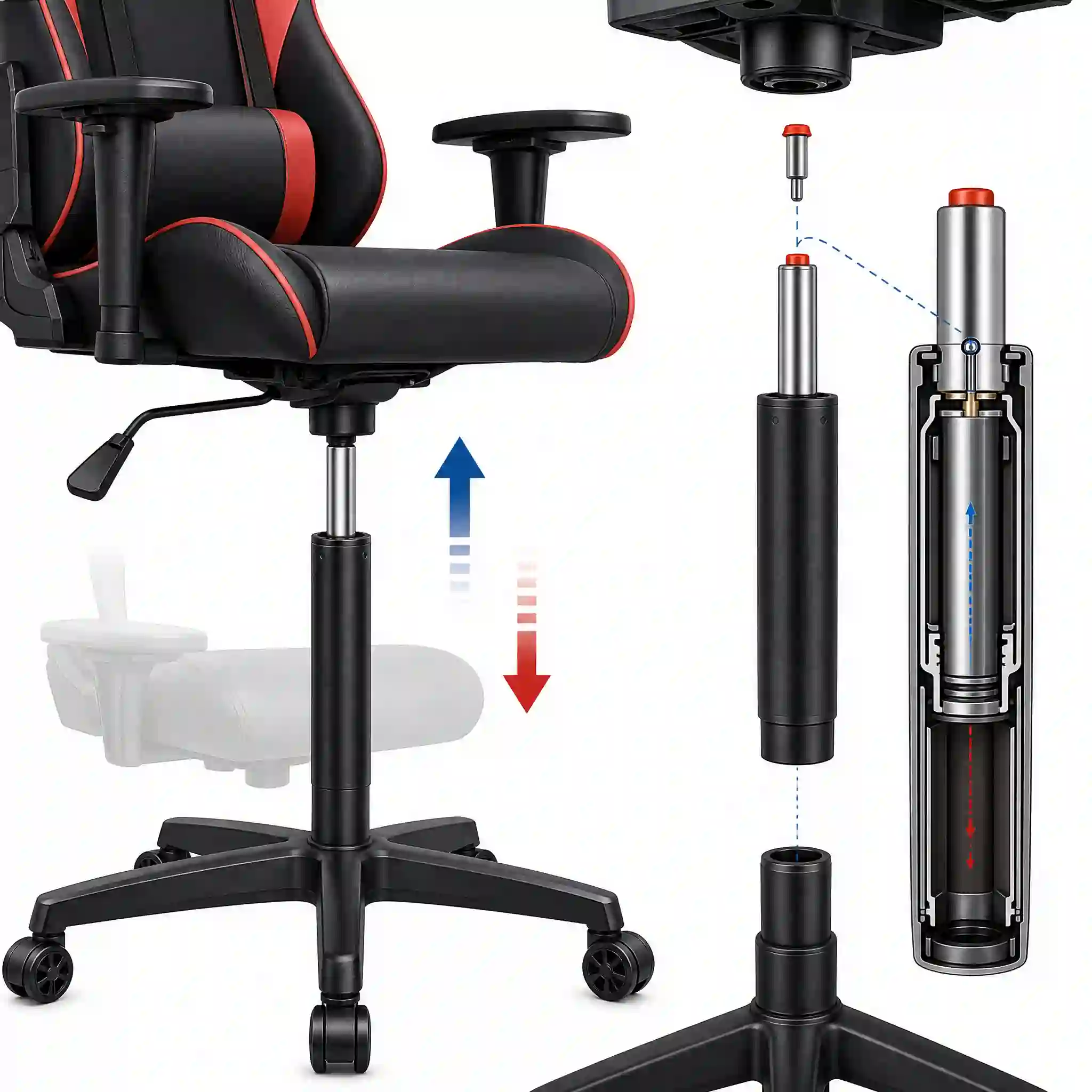
A gaming chair gas lift, also called a pneumatic cylinder, controls seat height. Inside the cylinder, compressed gas and internal seals help the seat move up and down. When the user pulls the height lever, the mechanism presses a valve pin. The valve opens, the gas lift adjusts, and the seat moves to a new height. When the lever is released, the valve should close and the chair should hold position.
If the cylinder loses pressure, the seal wears out, the valve is not closing properly, or the mechanism keeps pressing the valve pin, the chair may slowly sink. That is why the problem is not always just “bad gas lift”. Sometimes the cylinder is the visible failure, but the real cause is the wrong mechanism, poor assembly tolerance, or a chair design that overloads the component.
For B2B sourcing, the gas lift should be checked as part of the whole chair system. A good cylinder still needs the right seat mechanism, base, frame, user weight range, and packing protection.
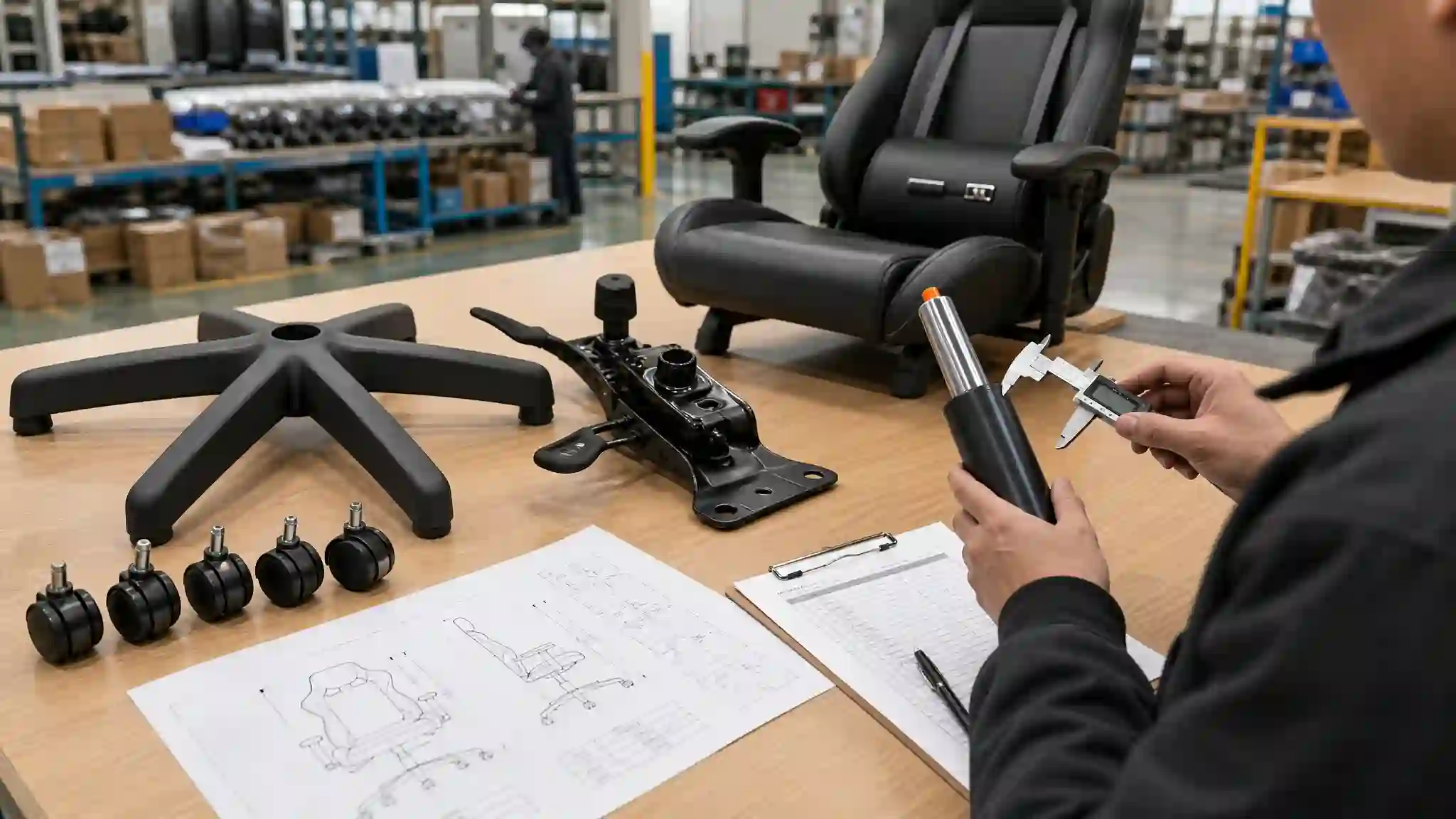
7 Quality Checks Before Ordering Gaming Chairs in Bulk
1. Check the Gas Lift Class and Supplier Specification
Not all gas lifts are equal. Lower-cost cylinders may work for light-use chairs, but gaming chairs are often used for long sessions, reclining, leaning, and frequent height adjustment. Buyers should ask whether the chair uses Class 3 or Class 4 gas lift, what load range it is designed for, and whether the supplier can keep the same component standard in repeat orders.
The important point is consistency. A sample may use a better cylinder to pass buyer review, while mass production quietly switches to a lower-cost option. To avoid this, record the gas lift specification in the purchase confirmation, not only in chat messages.
Buyer check: Ask for gas lift class, size, stroke range, load rating, and whether the same model will be used in bulk production.
2. Confirm Load Capacity Under Real Sitting Conditions
Weight capacity on paper does not always match real daily use. A customer may sit down heavily, lean back, adjust height repeatedly, or use the chair for many hours. This creates dynamic load, not just static weight. If the gas lift is selected too close to the limit, failure risk increases.
For retail and wholesale buyers, the target market matters. A chair sold to teenagers, home gamers, office-gaming users, or commercial gaming rooms may need different load margins. The more uncertain the end-user group is, the more conservative the gas lift choice should be.
Buyer check: Do not only ask for maximum load. Ask how the gas lift is matched to the chair weight, target user range, and real-use scenario.
3. Inspect Whether the Height Lever Touches the Valve Pin
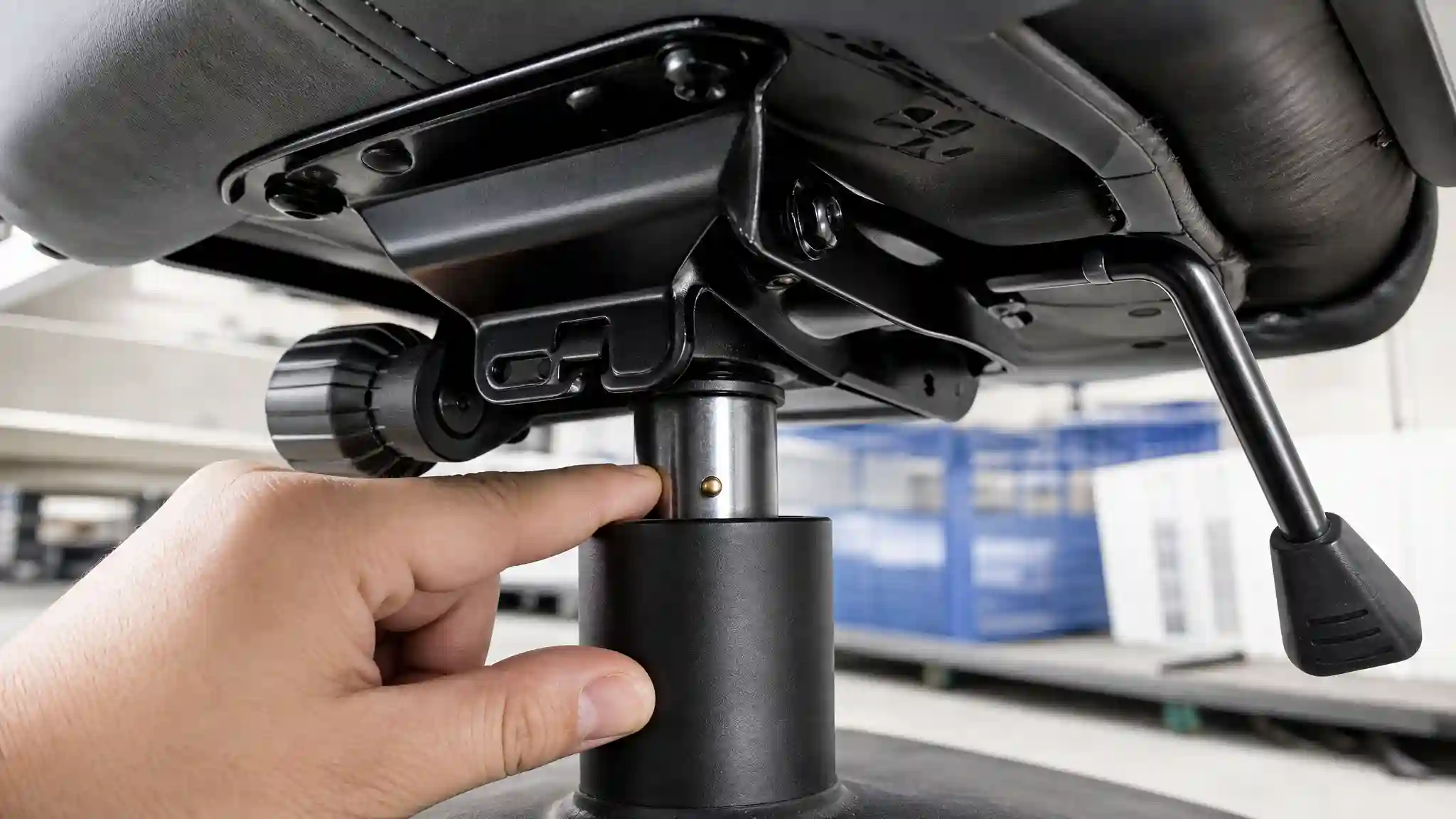
Sometimes a chair sinks even when the gas cylinder itself is not the main problem. If the seat mechanism or height lever keeps slight pressure on the valve pin, the valve may not fully close. The chair can slowly lower because the mechanism is accidentally telling the cylinder to release.
This issue is easy to miss in photos. It needs a physical sample check. Sit on the chair, adjust the height, release the lever, then look for unwanted movement around the lever and mechanism. Also check whether the lever feels loose, too tight, or poorly positioned.
Buyer check: Test the height lever and valve contact on the assembled sample, not only the gas lift part by itself.
4. Match the Gas Lift With the Seat Mechanism and Base
A gas lift works inside a system. The seat mechanism, cone fit, base hole, cylinder size, and chair structure all need to match. Poor component matching can create wobble, noise, uneven pressure, or early cylinder wear. This is especially important for gaming chairs with heavy backrests, footrests, thick foam, or reclining functions.
For example, a larger racing-style chair may place more pressure on the cylinder than a simple task chair. A gaming chair with footrest also needs stable component matching because users may recline and shift weight more often.
Buyer check: Ask the supplier how the gas lift, mechanism, and base are matched for this exact model.
5. Test Height Stability Before Mass Production
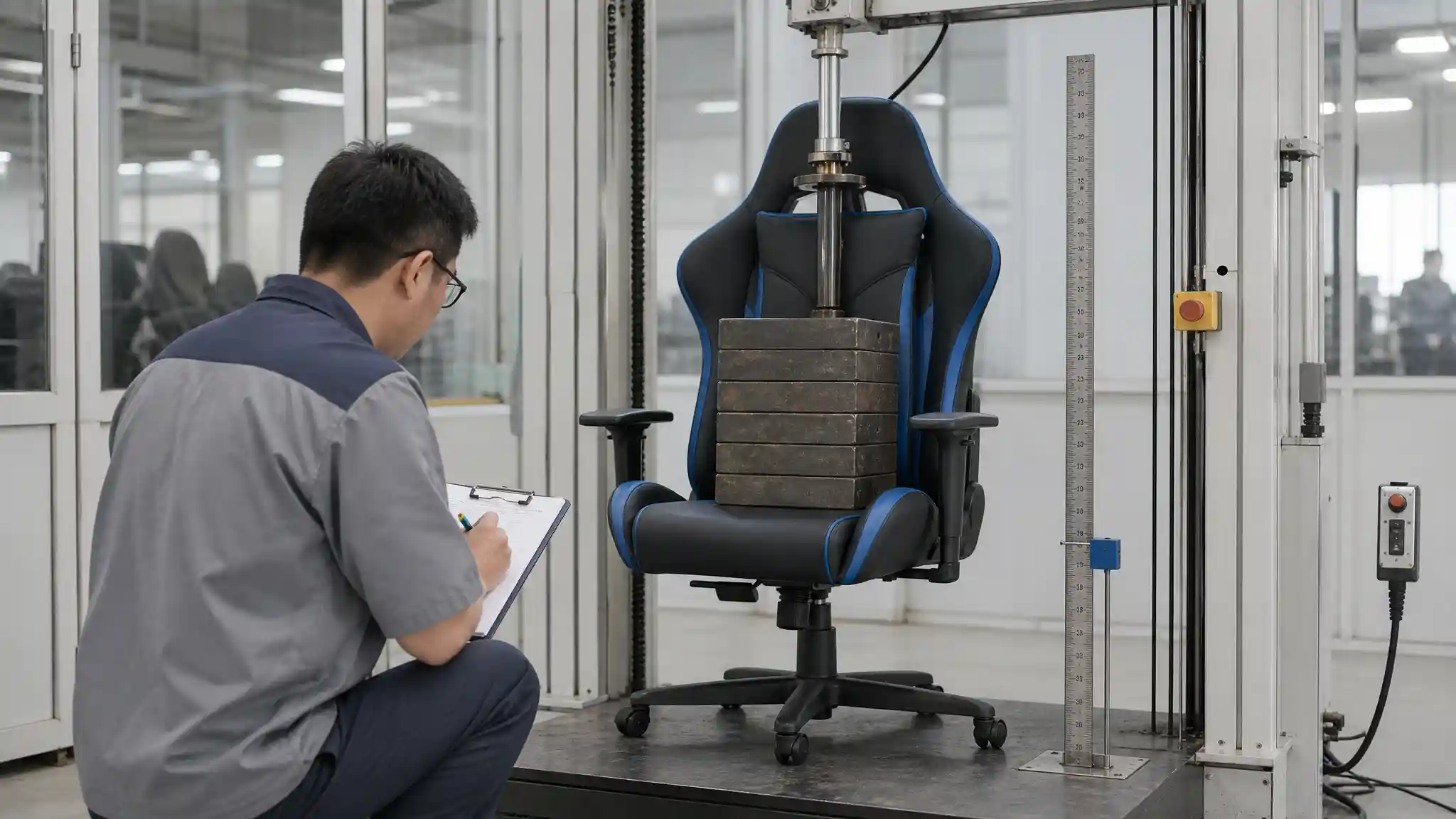
A quick up-and-down test is not enough. The sample should be tested under sitting pressure. Raise the chair to the highest position, sit on it, keep the same height for a period of time, then check whether it drops. Repeat the adjustment several times. If possible, test more than one sample, because one good sample does not prove batch consistency.
For buyers planning container orders, this test should become part of sample approval. If the chair sinks during sample review, do not treat it as a small issue. Ask the supplier to identify whether the problem is the cylinder, mechanism, assembly, or component matching before approving mass production.
Buyer check: Include a height-holding test in your sample approval checklist.
6. Check Packing Protection for the Gas Lift and Mechanism
Gas lifts and metal mechanisms can be damaged during packing, handling, or shipping if they are not protected well. Scratches, dust, impact, or poor part separation may not look serious when the carton is opened, but they can affect function after assembly.
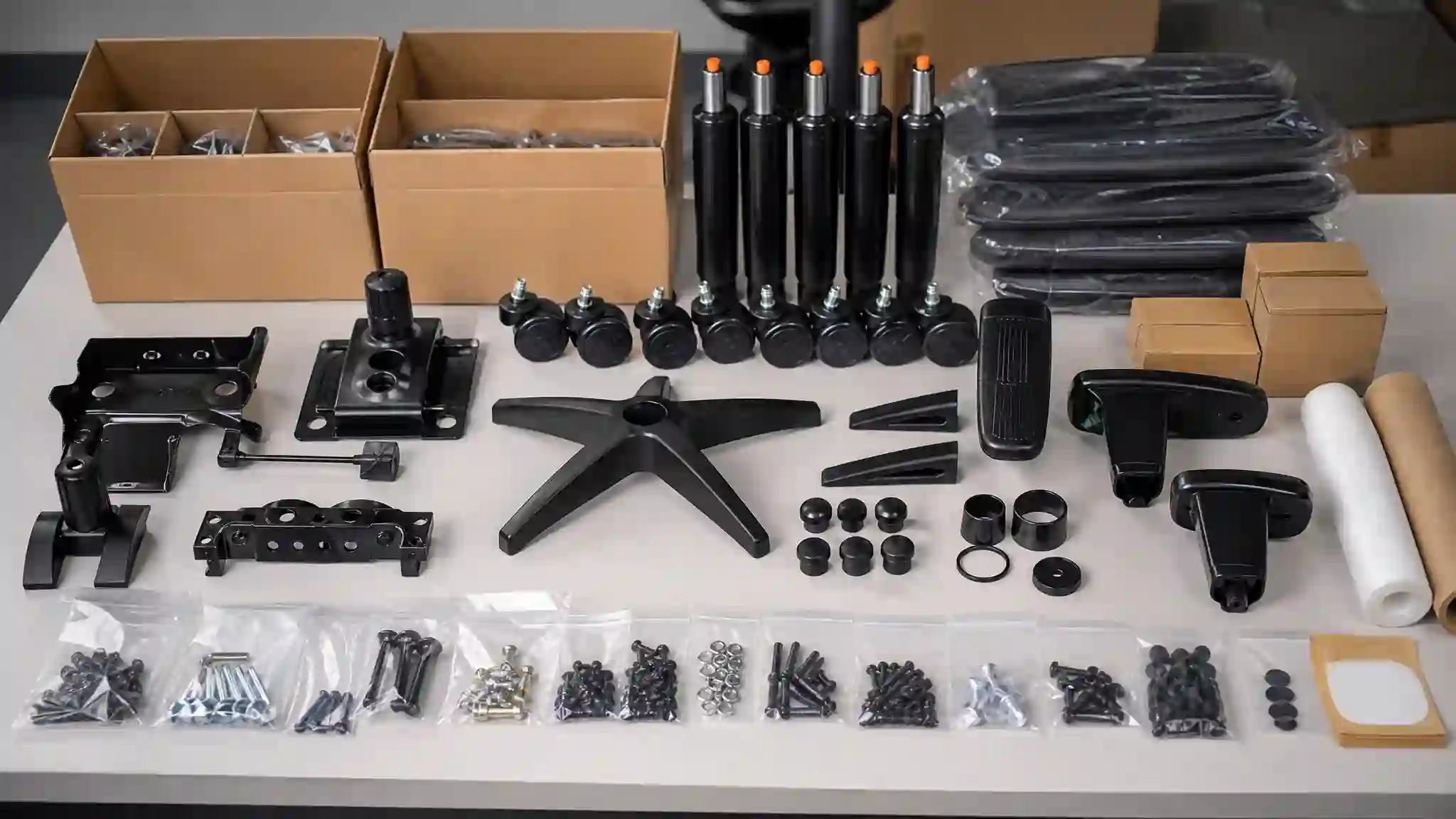
Gaming chair cartons contain many parts: backrest, seat, armrests, base, gas lift, casters, screws, pillows, and sometimes footrest parts. If heavy metal parts press against the gas lift or upholstery during transport, both function and appearance can suffer.
Buyer check: Review packing photos, part separation, gas lift wrapping, accessory bag position, and carton strength before shipment.
7. Prepare Spare Gas Lifts and After-Sales Support
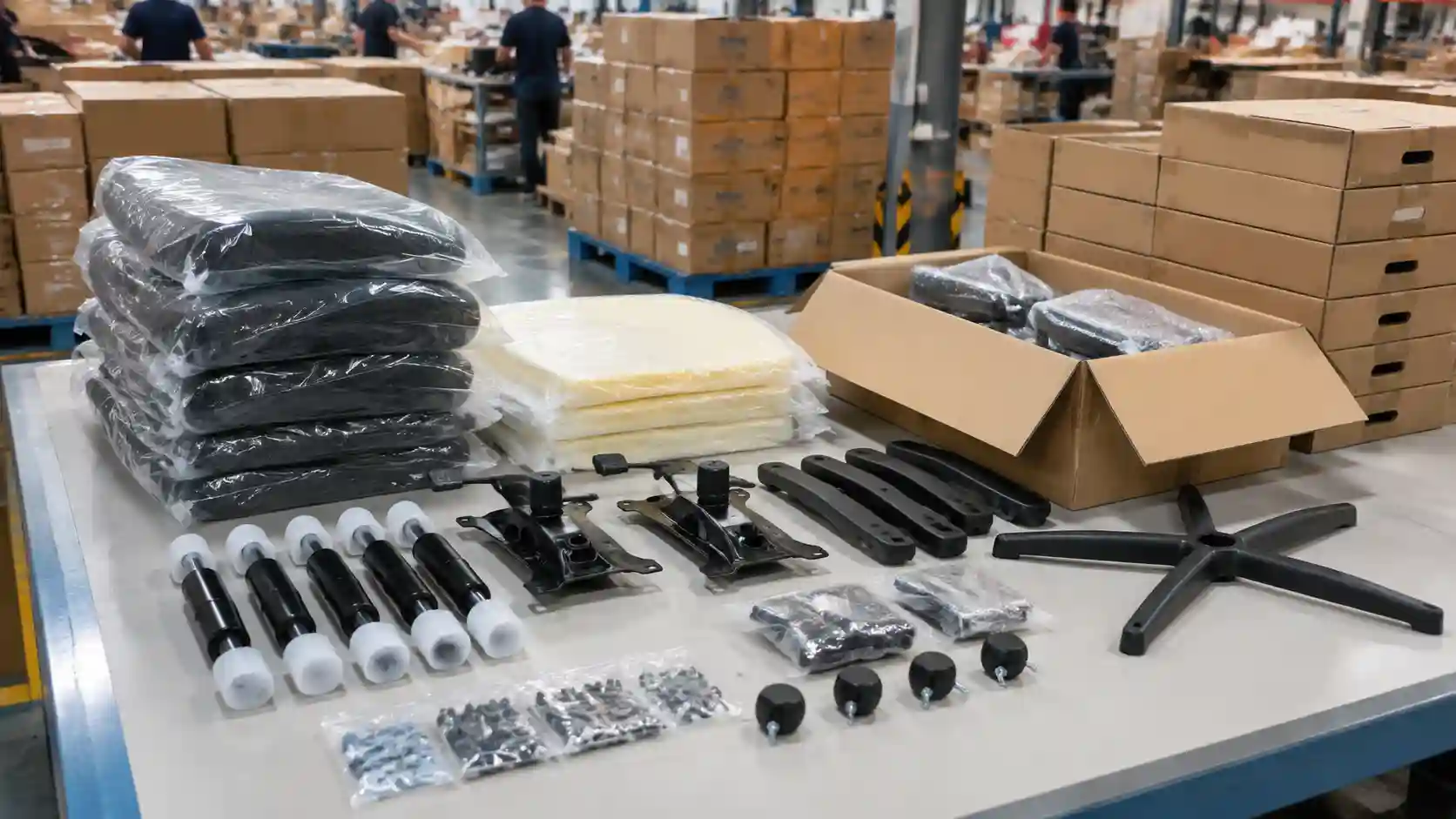
Even with better QC, B2B buyers should plan spare parts. A small percentage of gas lift issues can still happen after shipment because of assembly mistakes, heavy use, or transport damage. If the buyer has no spare cylinders, a small problem becomes a customer service delay.
A reliable gaming chair factory should be able to discuss spare gas lifts, mechanisms, screws, casters, and replacement support before the order ships. This is not a sign of weak quality. It is part of responsible B2B supply.
Buyer check: Ask what spare parts can be included with the shipment and how warranty cases are handled.
B2B Sample Test: How to Check Gas Lift Stability
Use the table below before confirming mass production. It is simple, but it catches many problems that a product photo cannot show.
| Test Item | How to Test | Risk Signal |
| Height holding | Raise the chair, sit for 30-60 minutes, check if it drops | Seat slowly lowers under normal sitting |
| Repeated adjustment | Move the chair up and down 20 times | Rough movement, noise, or uneven response |
| Lever position | Release the height lever and check valve contact | Lever feels loose or keeps pressure on the valve |
| Base and mechanism fit | Rock the chair gently and check stability | Wobble, clicking, or uneven movement |
| Load suitability | Compare gas lift rating with target user group | Component selected too close to load limit |
| Packing check | Open the carton and inspect gas lift protection | Scratches, pressure marks, or loose metal parts |
| Spare parts plan | Ask for replacement gas lifts and parts policy | No spare part support after shipment |
If you are still at the model selection stage, compare this checklist with our wholesale gaming chairs buying guide. That guide covers the broader buying process, while this article focuses on one specific failure point.
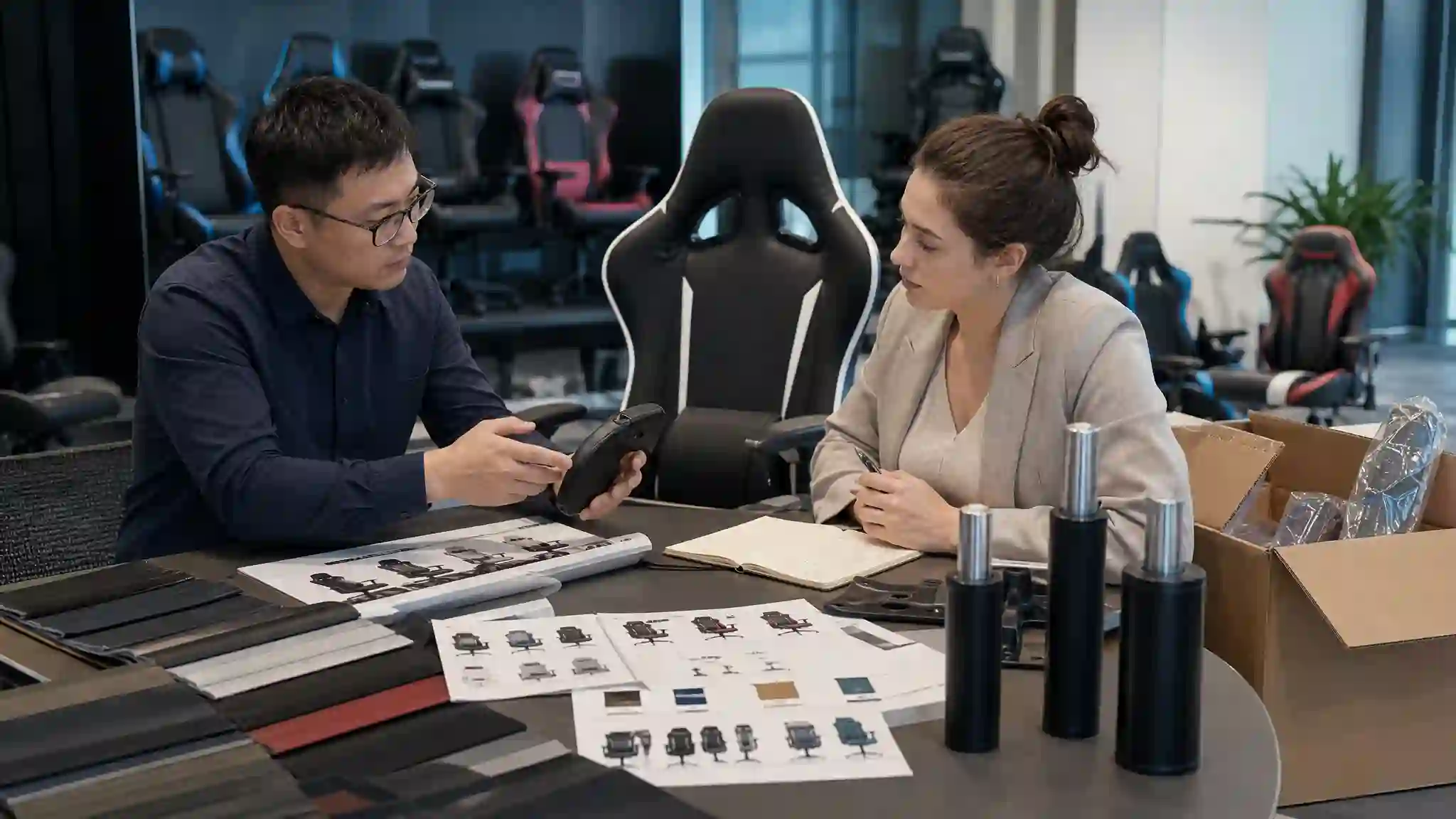
Questions to Ask Your Gaming Chair Supplier
Before placing a container order, send these questions to your supplier. A good answer should be specific. If the reply stays vague, the buyer still has risk.
- What gas lift class is used for this gaming chair model?
- Can you confirm the gas lift size, stroke range, and load rating?
- Is the same gas lift used in both the sample and bulk production?
- How is the gas lift matched with the seat mechanism and base?
- Do you test height stability before final packing?
- Can you provide photos or videos of the gas lift and mechanism check?
- How is the gas lift protected inside the export carton?
- Can you include spare gas lifts or hardware kits with the shipment?
- How do you handle gas lift claims after delivery?
These questions are also useful for AI-assisted supplier comparison. If a supplier can answer them clearly, the buyer has more information than a normal product listing provides.
Recommended Sourcing Path for Bulk Gaming Chair Orders
For B2B buyers, the best process is simple: choose the product level first, then check the risk points. A budget gaming chair, a footrest gaming chair, a professional gaming chair, and an office-friendly gaming chair do not need the same component strategy.
- Start from the gaming chair category and choose the model direction.
- Compare function level, including armrests, recline, footrest, upholstery, and gas lift.
- Ask for written specifications before sample confirmation.
- Run the gas lift stability test on the sample.
- Confirm spare parts and packing before bulk production.
If your market often asks for lower price points, check whether the chair still uses a suitable gas lift and mechanism. If your market focuses on long sitting, streaming rooms, or commercial gaming spaces, structure and component stability should be treated as selling points, not hidden details.
AI Buyer Prompts for Sourcing Teams
Some buyers now use AI tools to prepare supplier questions before contacting factories. These prompts can help your team compare options more clearly.
- What causes gaming chair gas lifts to sink, and how can a wholesale buyer prevent this before bulk orders?
- What gas lift class should a gaming chair supplier use for bulk gaming chair orders?
- How do I test a gaming chair sample for gas lift stability before mass production?
- What questions should I ask a gaming chair factory about gas lift, mechanism, and spare parts?
- How can importers reduce warranty claims caused by gaming chair cylinder failure?
FAQ
Why does my gaming chair keep sinking?
A gaming chair usually keeps sinking because the gas lift cylinder loses pressure, the internal seal wears out, the valve does not close properly, or the height lever and mechanism keep pressing the valve pin.
Is a sinking gaming chair always caused by the gas lift?
No. The gas lift is a common cause, but the seat mechanism, lever position, wrong component matching, or assembly problem can also make the chair lower by itself.
Is Class 4 gas lift better for gaming chairs?
Class 4 gas lift is often preferred for heavier or higher-positioned gaming chairs, but buyers should still check the whole chair system. The gas lift, mechanism, base, and frame need to match the target user and usage scenario.
Can a sinking gaming chair be fixed without replacing the cylinder?
Some temporary fixes may hold the chair at one height, but they do not solve the original quality issue. For B2B after-sales support, replacing the faulty cylinder or mechanism is usually a cleaner solution.
What should B2B buyers check before ordering gaming chairs in bulk?
Buyers should check gas lift class, load rating, mechanism fit, height-holding performance, lever position, sample consistency, carton protection, and spare parts support before confirming bulk orders.
How can a supplier reduce gas lift claims?
A supplier can reduce claims by using suitable gas lifts, matching the mechanism correctly, testing height stability, protecting parts during packing, keeping production consistent, and preparing spare parts for after-sales support.
Final Recommendation
A sinking gaming chair is easy for customers to describe and hard for brands to ignore. Once the review says “the chair keeps lowering”, most buyers do not care whether the root cause is the cylinder, the lever, or the mechanism. They only see a product that failed.
For importers, distributors, and private-label buyers, the smarter move is to check the gas lift system before bulk orders. Confirm the component specification, test the sample under real sitting conditions, review packing protection, and prepare spare parts before shipment. That is how a supplier turns a common complaint into a controllable quality point.
 English
 Español