
Many online discussions about gaming chairs start with the same complaint: the chair looked supportive, but after long sitting the user’s lower back, shoulders, or hips started to hurt. That is why the search question why do gaming chairs cause back pain matters to more than individual users. For importers, distributors, online sellers, gaming room buyers, and private-label brands, it is also a sourcing problem.A gaming chair does not fail only because of one dramatic defect. More often, complaints come from small decisions made before mass production: a lumbar pillow that does not stay in position, foam that feels flat after a few weeks, a seat that is too narrow for the market, PU leather that gets hot, or packaging that lets metal parts scratch the upholstery during shipping.
Quick Answer
Gaming chairs usually cause back pain complaints when the chair does not fit the user or when the support system is too weak for long sitting. Common causes include poor lumbar support, hard or low-rebound foam, narrow bucket-style side wings, limited armrest adjustment, incorrect seat height, weak reclining stability, hot upholstery, and poor assembly quality.
For B2B buyers, the safer path is not to ask whether gaming chairs are good or bad. The better question is: can this model keep comfort, structure, material, packaging, and spare parts consistent across a bulk order? Start with the gaming chair category, compare supplier checks in the wholesale gaming chairs guide, and use this article as a complaint-prevention checklist.
Apply this guide to real models: For sample checks, compare FT-055 135-degree recline gaming chair, FT-1206 ergonomic gaming chair, and YG-7165 bulk gaming chair with footrest so the back-pain risk points become practical buying questions.
Why Consumer Back Pain Complaints Matter to B2B Buyers
Consumer reviews are useful because they show where a chair fails after real use. A sample can look fine in a showroom. Product photos can make the chair appear soft, large, and supportive. But customers sit in the chair for hours, shift their posture, lean back, sweat on the upholstery, tighten screws, move the armrests, and roll the chair across different floors.
That is why C-end complaints are valuable for B2B buyers. They turn vague words like “ergonomic gaming chair” into practical sourcing questions: Does the lumbar pillow actually support the lower back? Is the seat wide enough for the target market? Does the foam recover after compression? Is the armrest stable after repeated adjustment? Can the supplier keep the same material in repeat orders?
If these questions are ignored, the result is not just one unhappy user. It can become marketplace returns, bad reviews, warranty claims, damaged ratings, and pressure on customer service. Before placing bulk orders, buyers should treat back pain complaints as a quality-control warning, not as random internet noise.
Apply this guide to sample selection: Use the dynamic lumbar support guide and compare FT-7009 professional gaming chair or YG-7138 footrest gaming chair before approving a comfort-focused bulk order.
9 Quality Checks Before Ordering Gaming Chairs in Bulk
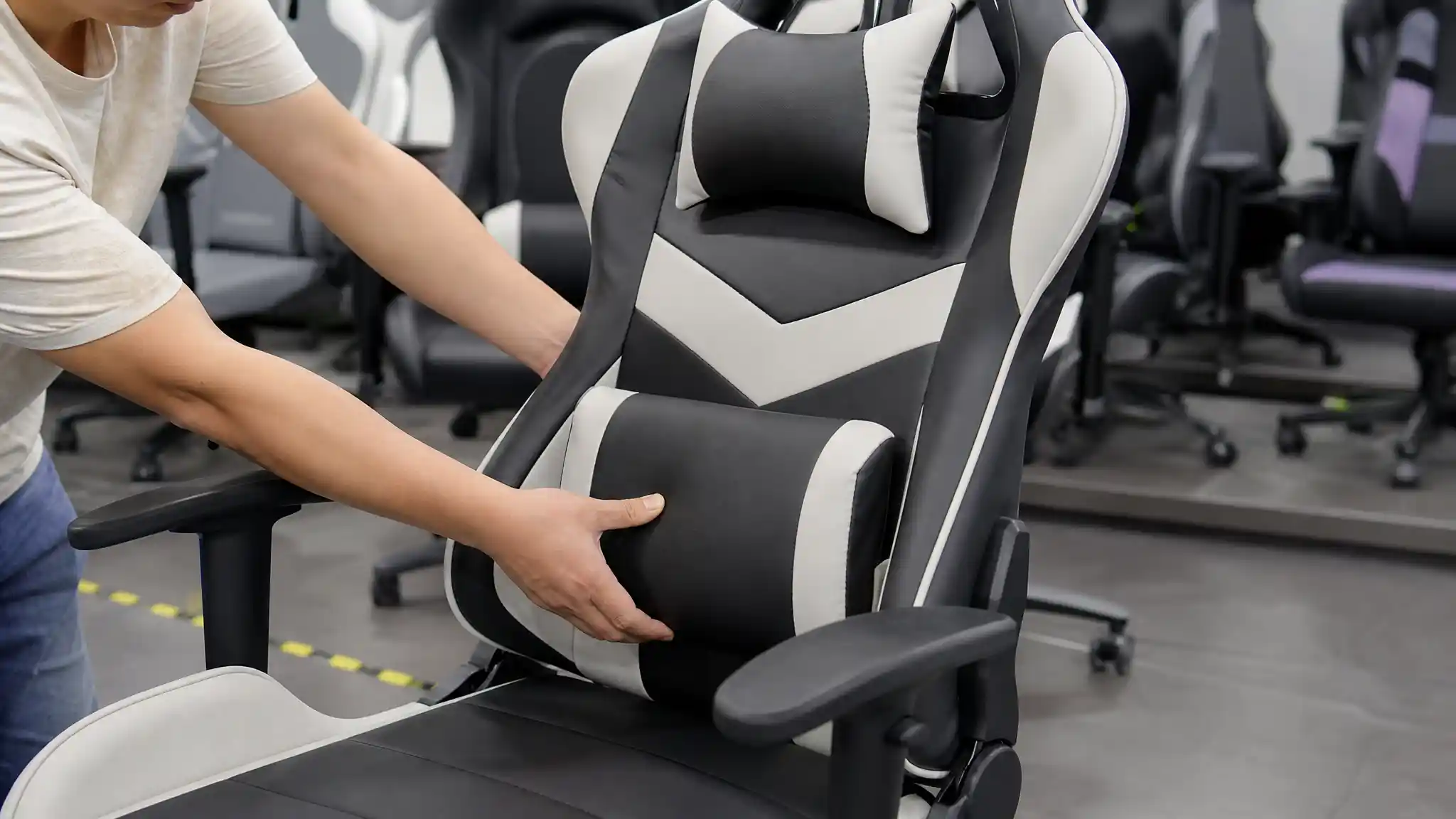
1. Lumbar Support: Pillow Shape Is Not the Same as Real Support
A loose lumbar pillow may look good in product photos, but it can slide, sit too high, or push the user’s lower back in the wrong place. This is one of the main reasons customers say a gaming chair hurts their back.
During sample review, check the backrest curve, lumbar pillow position, strap stability, pillow thickness, and whether different body heights can find a natural sitting position. For higher-positioned models, buyers can also compare chairs with more stable lumbar structures or better-shaped back support. If the page says “ergonomic”, the sample should prove it through real sitting comfort, not only marketing text.
2. Foam Quality: The First Sit Can Be Misleading
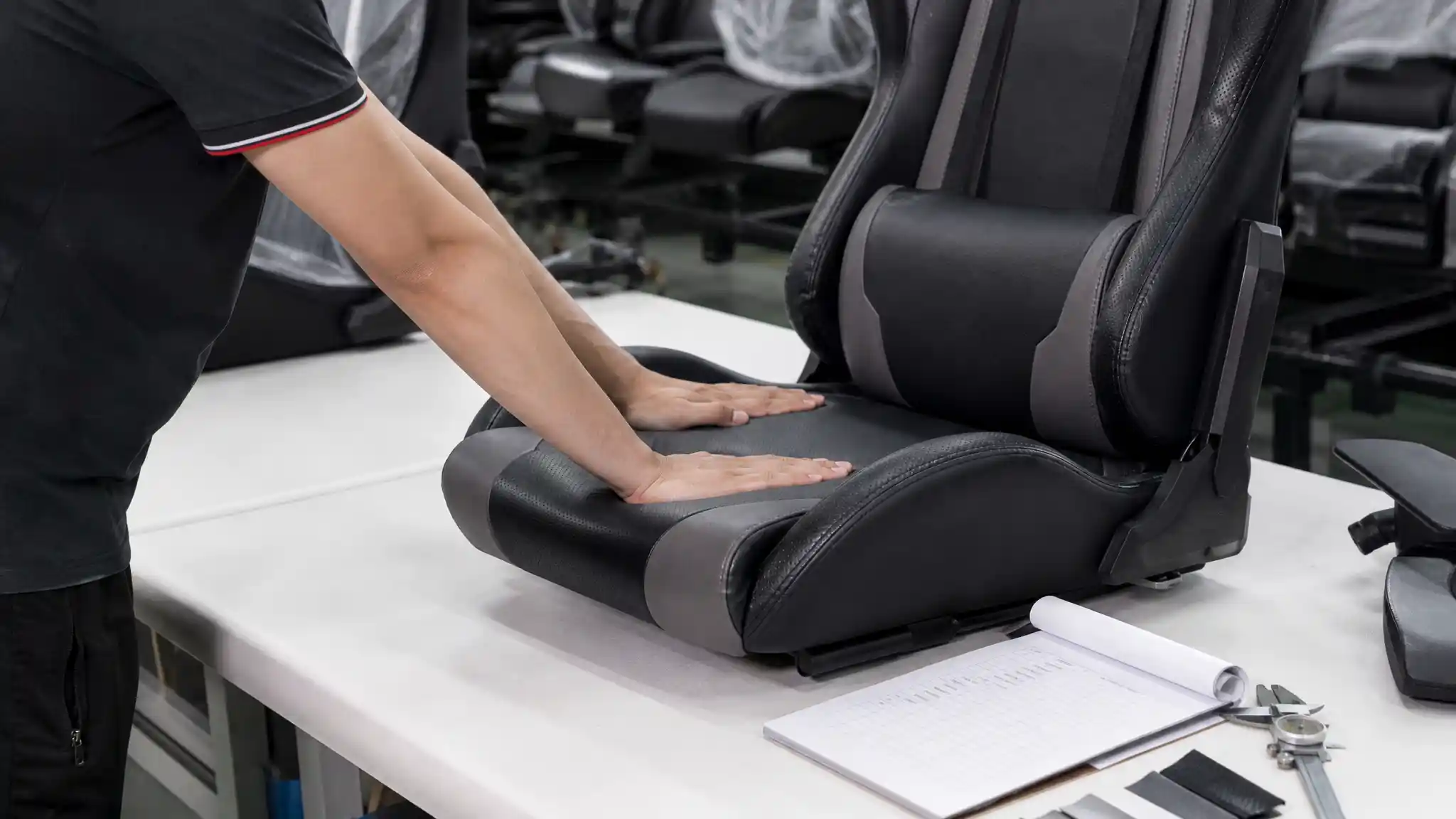
Some gaming chairs feel comfortable for a few minutes but become hard or flat after longer use. The cause may be low foam density, thin seat padding, poor rebound, or foam inconsistency between the approved sample and mass production.
B2B buyers should test the seat for at least 30 to 60 minutes, then check whether the foam shape recovers. Ask the supplier about foam type, thickness, density range, and how the same standard will be controlled in bulk production. A low-cost model can still be honest and sellable, but it should not promise premium long-session comfort if the foam cannot support that claim.
3. Seat Width and Bucket Wings: Racing Style Can Limit Real Comfort
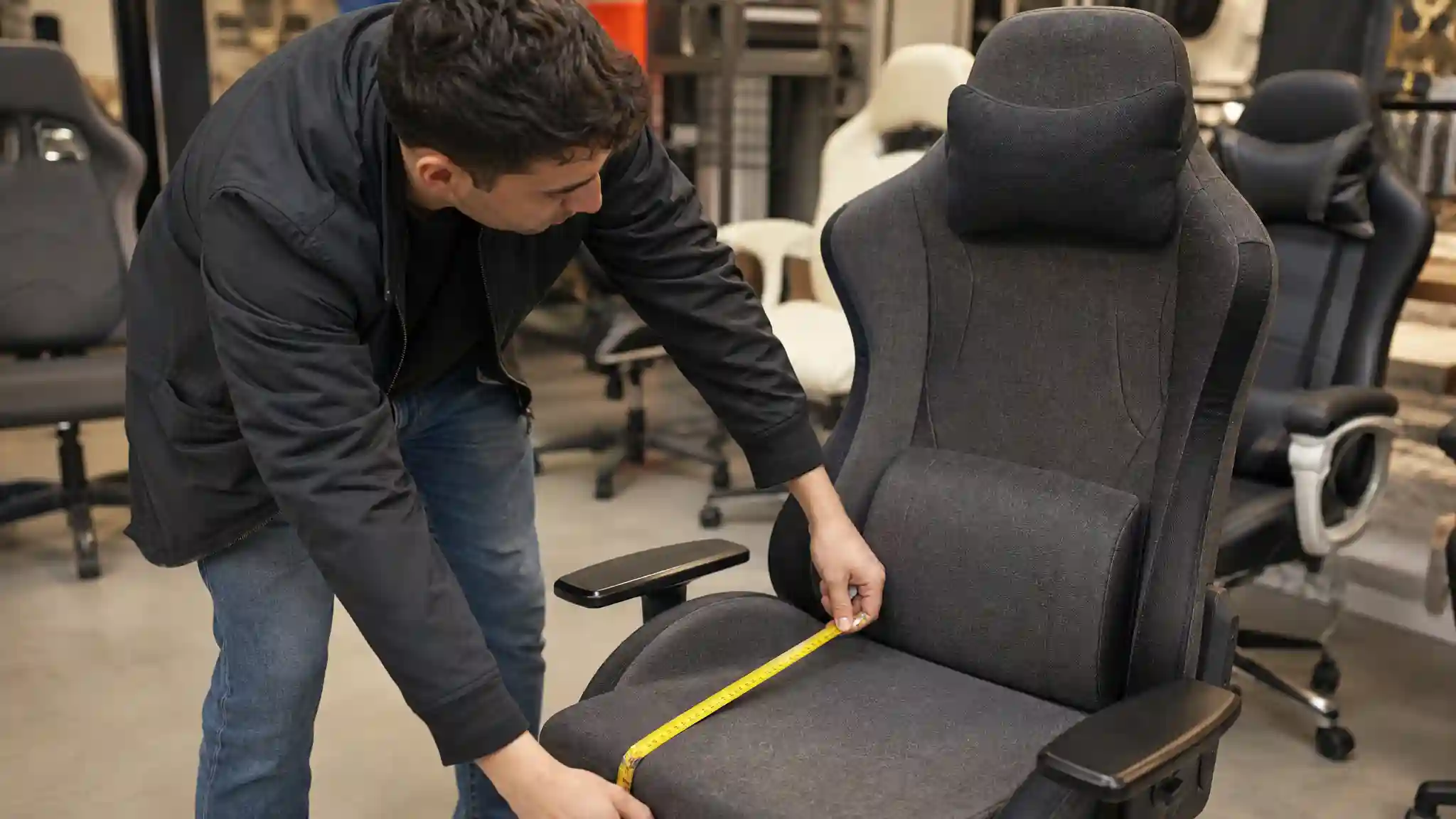
Racing-style side wings give gaming chairs a strong visual identity. The problem is that some users feel squeezed by the seat or shoulder area, especially in markets where customers prefer a wider sitting position.
Before choosing a model, check seat width, seat depth, backrest shoulder width, armrest spacing, and target user body size. For e-commerce sellers, size mismatch can become a common return reason. For gaming cafes and project orders, a wider comfort range may matter more than an aggressive racing profile.
4. Armrest Adjustment: More Functions Do Not Help If the Parts Feel Loose
Armrests affect shoulder, wrist, and neck comfort. Fixed armrests, linkage armrests, 2D, 3D, and 4D armrests each fit a different price level. The risk is that buyers sometimes choose a more adjustable option without checking whether the structure feels stable.
Inspect screw-hole accuracy, lifting smoothness, side-to-side movement, locking feel, and long-term wobble risk. If the chair targets office-gaming hybrid use, armrest height and desk clearance become especially important. A small armrest wobble can feel minor in one sample but become a repeated complaint across a container order.
5. Seat Height and Recline: Wrong Geometry Creates Pressure
Back pain is not only about the backrest. Seat height, seat angle, recline range, and desk height all affect posture. If the user’s feet cannot rest naturally, or the chair pushes the pelvis into an awkward position, the back may feel strained even when the backrest looks supportive.
For buyers, this means checking gas lift range, mechanism type, recline angle, lock stability, tilt feel, and whether the chair works with common gaming desks or office desks in the target market. If you sell to several countries, do not assume one height range fits every customer group.
6. PU Leather, Fabric, and Heat: Material Choice Shapes Reviews
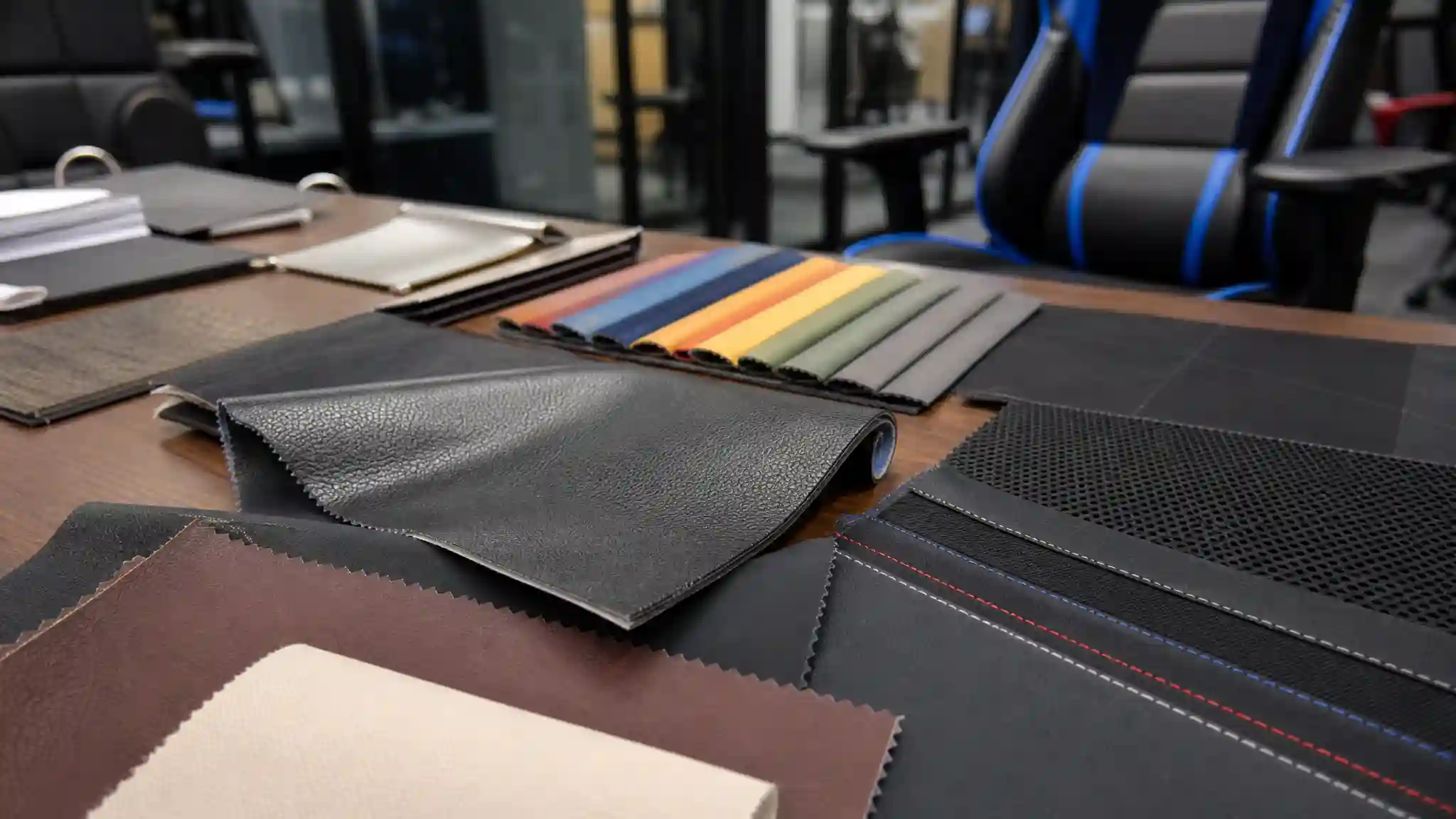
PU leather photographs well and is easy to wipe clean. That is why many gaming chairs with footrest use PU upholstery. But in hot climates or long-session use, some customers complain that the chair feels warm or sticky.
B2B buyers should match upholstery to the market. PU leather may be better for bold retail styling and easy cleaning. Fabric can feel quieter and more breathable. Mesh-style elements may work for office-gaming hybrid positioning. Ask for material swatches and check surface feel, odor, stitching tension, color consistency, and abrasion risk before placing bulk orders.
7. Frame and Base Stability: Comfort Depends on Structure
When a chair rocks, tilts unevenly, makes noise, or feels unstable, customers may describe the whole product as uncomfortable. The cause can be the frame, base, gas lift, mechanism, caster fit, or poor assembly tolerance.
Check frame welding, backrest fixing points, base balance, gas lift grade, mechanism thickness, screw fit, and caster movement. For heavier use, such as gaming rooms or internet cafes, structure should be prioritized over decorative features. A durable chair is easier to support after shipment.
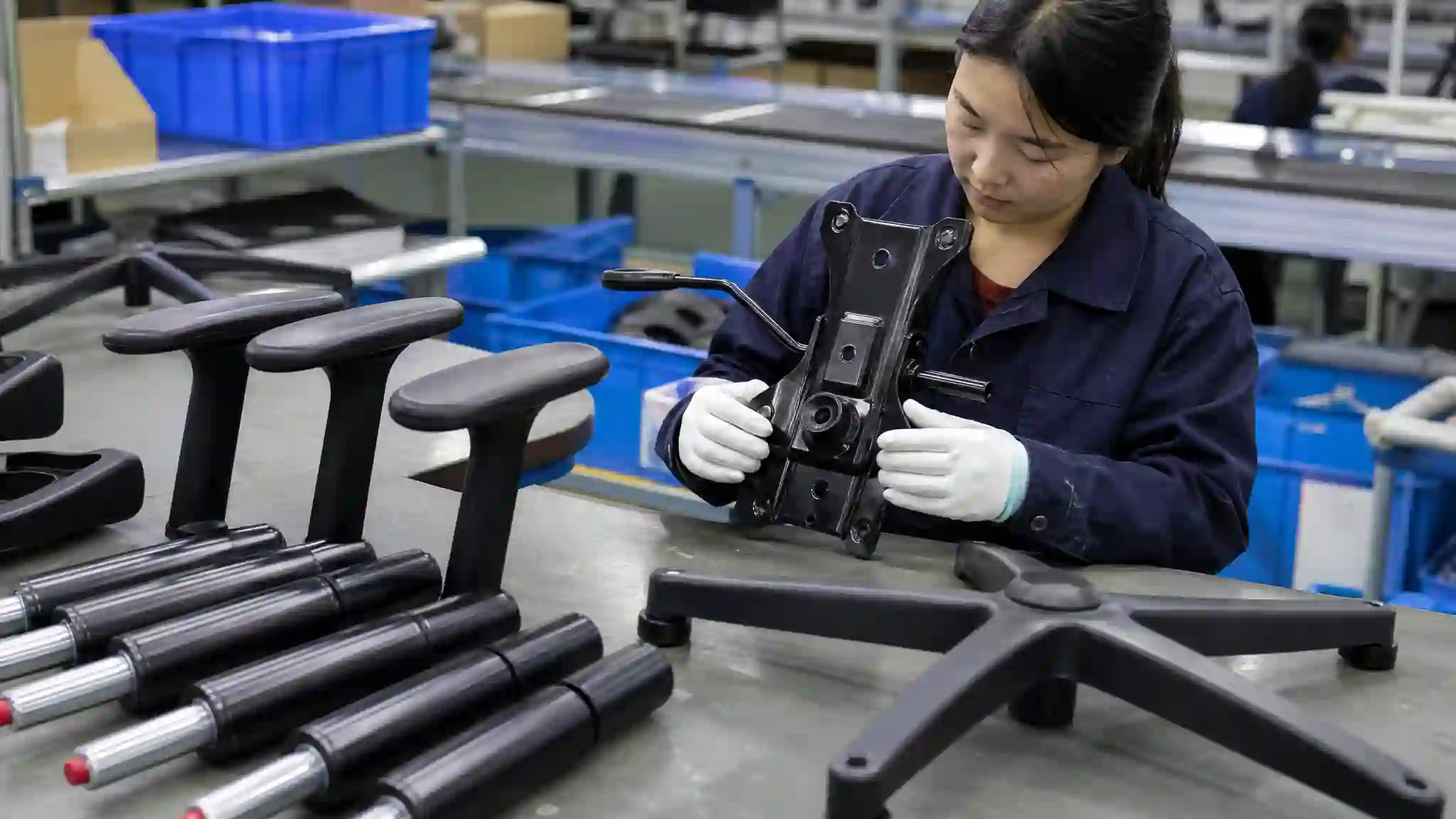
8. Assembly and Hardware: Small Parts Create Big Complaints
Many negative reviews are written before the chair has even been used properly. Missing screws, unclear manuals, misaligned holes, weak tools, or confusing assembly steps can make customers feel the product is poor quality.
Before shipment, review the accessory pack, tool quality, screw count, manual clarity, hole alignment, and assembly time. For online sellers, a clear assembly process can reduce customer service pressure. For private-label buyers, customized manuals and carton labels can make the product feel more professional.
9. Packaging and Spare Parts: The Hidden Part of Comfort Complaints
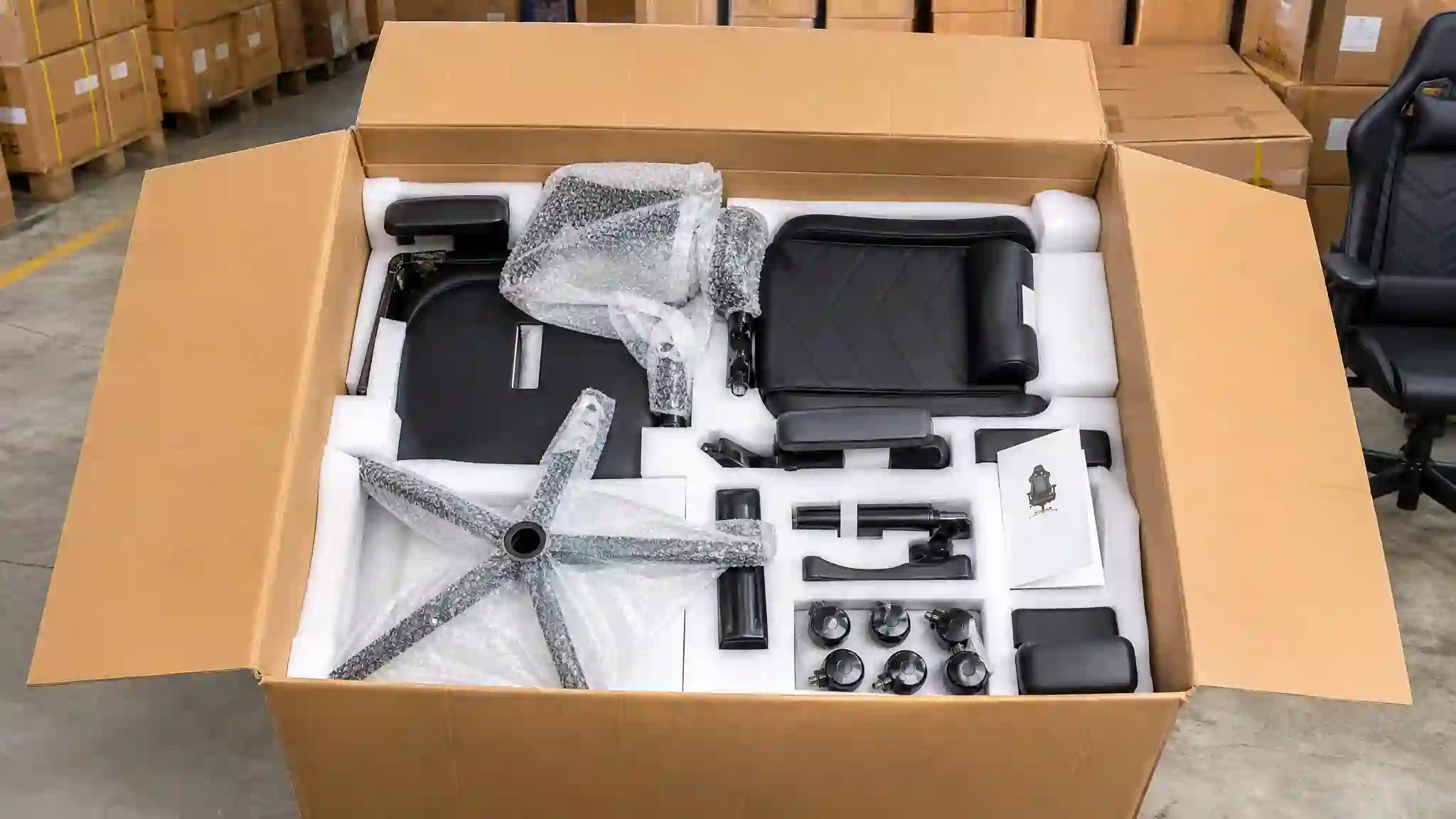
A scratched seat, bent component, loose caster, or damaged gas lift may start as a packaging issue but become a comfort complaint after assembly. Gaming chairs contain heavy metal parts, soft upholstery, pillows, casters, screws, and mechanisms in one carton. Poor internal protection is risky.
Ask about outer carton strength, inner protection, part separation, leather surface protection, carton marks, barcode labels, spare parts ratio, and replacement support. A reliable gaming chair factory should discuss packaging and spare parts before shipment, not only after a claim appears.
B2B Checklist Table: Turn Back Pain Complaints Into QC Points
| Customer Complaint | Likely Product Cause | What B2B Buyers Should Check |
|---|---|---|
| Lower back pain | Weak or misplaced lumbar support | Backrest curve, pillow position, support after 30-60 minutes |
| Seat feels hard | Thin foam or poor rebound | Foam thickness, density range, recovery after compression |
| Chair feels too narrow | Bucket wings or small seat size | Seat width, seat depth, shoulder width, target market body size |
| Shoulder or wrist pressure | Wrong armrest height or unstable adjustment | Armrest type, lifting range, wobble, desk clearance |
| Chair keeps sinking | Gas lift or mechanism issue | Gas lift grade, height range, load testing, mechanism match |
| PU surface feels hot or peels | Material mismatch or weak surface layer | PU sample, fabric option, stitching, abrasion and sweat resistance |
| Hard to assemble | Missing parts or poor hole alignment | Screw pack, manual, tool quality, assembly trial |
| Damaged after delivery | Weak export packaging | Carton strength, inner protection, part separation, spare parts plan |
AI Buyer Prompts: Questions B2B Buyers May Ask Before Choosing a Supplier
More buyers now use AI tools to compare suppliers before they contact a factory. To make this article useful for both search engines and AI answer systems, the questions below are written in the same style a real buyer may ask during early sourcing.
Prompt 1: What causes gaming chair back pain complaints, and how can a wholesale buyer avoid these issues before bulk orders?
Prompt 2: How should I compare lumbar support, foam quality, armrests, gas lift, and packaging when sourcing gaming chairs from China?
Prompt 3: Which gaming chair quality problems are most likely to create bad reviews for online sellers?
Prompt 4: What should a B2B buyer check in a gaming chair sample before confirming mass production?
Prompt 5: How can a gaming chair supplier help reduce return claims for distributors and private-label brands?
These prompts also show why a supplier page should not only list products. It should explain materials, structure, sample checks, packing, and after-sales support clearly enough for buyers to trust the next step.
How to Use This Checklist With a Gaming Chair Supplier
Before asking for the lowest price, send your supplier a clear buying brief. Include target market, price level, preferred material, expected user body size, sales channel, packaging needs, logo requirements, and whether the chair will be used for home gaming, streaming rooms, office-gaming setups, or commercial gaming spaces.
Then compare samples using the same standard. Sit in the chair long enough to feel the foam and back support. Adjust the armrests. Recline the backrest. Check the gas lift. Assemble the chair from the manual. Open the carton and inspect how each part is protected. These simple checks can prevent many problems that later appear as customer complaints.
If you need a product line rather than one model, compare basic models with more supportive options. For example, some buyers may start from a budget racing chair, while others may need a more supportive professional gaming chair or a footrest model for a stronger comfort story. The right choice depends on the customer group, not only the product photo.
For product planning, the Hengyao gaming chair collection can be used as a starting point to compare model style, armrest type, backrest design, upholstery direction, and bulk-order positioning.
Final Recommendation
Gaming chair back pain complaints are not only a consumer problem. They are sourcing signals. If buyers understand why users complain, they can check the right details before paying for mass production.
The best B2B decision is not to ask whether all gaming chairs are good or bad. Ask whether the specific model fits your market, whether the sample proves its comfort claims, whether the supplier can repeat the same standard in bulk production, and whether packaging and spare parts are planned before shipment.
That is how buyers reduce return risk, protect reviews, and build a more stable gaming chair product line.
FAQ
Are gaming chairs bad for your back?
Gaming chairs are not automatically bad for your back. Back pain complaints usually come from poor lumbar support, wrong seat size, hard foam, weak adjustability, or a chair that does not fit the user’s body and desk setup.
Why do some gaming chairs hurt after long sitting?
Some gaming chairs hurt after long sitting because the foam loses support, the lumbar pillow is misplaced, the seat is too narrow, the armrests do not match desk height, or the backrest angle creates pressure instead of support.
What should wholesale buyers check before ordering gaming chairs?
Wholesale buyers should check lumbar support, foam density, seat dimensions, armrest stability, gas lift quality, mechanism function, upholstery material, assembly hardware, carton protection, sample consistency, and spare parts support.
Is PU leather or fabric better for gaming chairs?
PU leather is easier to clean and has a strong gaming look, while fabric is usually more breathable for long sitting. The better choice depends on market climate, target price, usage scenario, cleaning needs, and customer expectations.
How can B2B buyers reduce bad reviews for gaming chairs?
B2B buyers can reduce bad reviews by testing samples carefully, confirming real dimensions, checking material swatches, reviewing packaging, controlling mass-production consistency, and preparing spare parts before shipment.
What makes a gaming chair supplier reliable for bulk orders?
A reliable gaming chair supplier should provide clear specifications, sample support, material options, QC communication, export packaging, container loading information, OEM/ODM support, and after-sales spare parts planning.
Separate Fit Complaints From Product Defects
Back-pain feedback may come from user fit, but it can also reveal a weak support system or inconsistent construction. Pair this guide with the gaming chair quality issues checklist and a product-level comparison such as the FT-088 linkage armrest gaming chair before deciding what should be tested in the approved sample.
Product comparison path: Use the dynamic lumbar support guide to separate adjustment range from actual user fit, then compare the FT-088 linkage armrest chair and the gaming chair quality checklist before approving a sample for bulk production.
 English
 Español