
Commercial bar stools with backs are usually chosen for one reason: buyers want guests to sit longer and feel more supported. That sounds simple. In a restaurant, hotel bar, cafe counter, clubhouse, or furniture wholesale program, though, a backrest adds more than comfort. It also adds weight, width, structure, packing risk, and quality points that should be checked before a bulk order.
A backrest that looks comfortable in a product photo may feel too upright in real use. A wide stool may reduce seating capacity at the counter. A weak back frame can loosen after repeated leaning. For a single home bar, that may be annoying. For a commercial buyer ordering dozens or hundreds of stools, it can become a return problem.
Commercial Bar Stools with Backs: Quick Sourcing Answer
Short answer: commercial bar stools with backs are a practical choice for restaurants, hotel bars, cafes, lounges, and other hospitality projects where guests sit longer than a quick drink. For a commercial bar stools wholesale order, confirm seat height, backrest angle, frame and footrest strength, upholstery, cleaning routine, spacing, export packing, and sample-to-bulk consistency before approving production.
Para restaurant bar stools with backs, comfort is only half the decision: the model must fit the counter, handle repeated leaning, stay stable on the floor, and remain serviceable after delivery. Bar stools for hospitality projects should also be judged against cleaning routines, seating capacity, carton protection, and repeat-order requirements. Compare the wholesale bar chair collection y el China bar stool supplier checklist when shortlisting models.
Why Bar Stools with Backs Matter in Commercial Spaces
Back support changes how long guests stay
Backless stools are useful when a venue wants fast turnover, open sightlines, and compact spacing. Bar stools with backs are different. They are better for places where customers sit longer: hotel lounges, restaurant bars, breakfast counters, cocktail areas, apartment clubhouses, and casual dining spaces.
A backrest gives the user a place to lean. That makes the stool feel closer to a chair while still keeping the counter-height or bar-height function. For hospitality buyers, that comfort can affect how guests experience the space.
A backrest also adds buying risk
The backrest is not only a comfort feature. It is also a structural part. Users lean on it, pull the stool by it, and sometimes twist while sitting. If the connection is weak, the stool may begin to wobble or make noise after repeated use.
This is why a bulk buyer should not judge a backed stool only by shape. The important question is: how is the backrest fixed to the frame, and can that structure survive daily commercial use?
Not every venue needs the same back height
A low-back stool can keep the counter area visually open. A full-back or high-back stool gives more support, but it takes more room and may feel too heavy in small spaces. For restaurants and hotels, this choice should match the seating time, layout, and brand style.
Fast-service cafes may only need low-back stools. Hotel lounges and cocktail bars usually benefit from a higher or more padded back. Office pantry counters may need something compact and easy to move.
Seat Height and Spacing Come Before Style
Confirm counter height before choosing the stool
The most common mistake is still height. Counter height stools usually work with 34-36 inch counters and often have 24-26 inch seat heights. Bar height stools usually work with 40-42 inch bar tops and often have 28-30 inch seat heights.
Buyers should leave around 10-12 inches between the seat and the counter or bar surface. This gives most users enough leg clearance without making the seating feel too low.
| Surface Type | Typical Surface Height | Common Seat Height | Mejor uso |
| Counter height | 34-36 in | 24-26 in | cafes, kitchen islands, office pantries |
| Bar height | 40-42 in | 28-30 in | bars, pubs, hotel lounges |
| Extra tall counter | 44-47 in | 33-36 in | custom commercial counters |
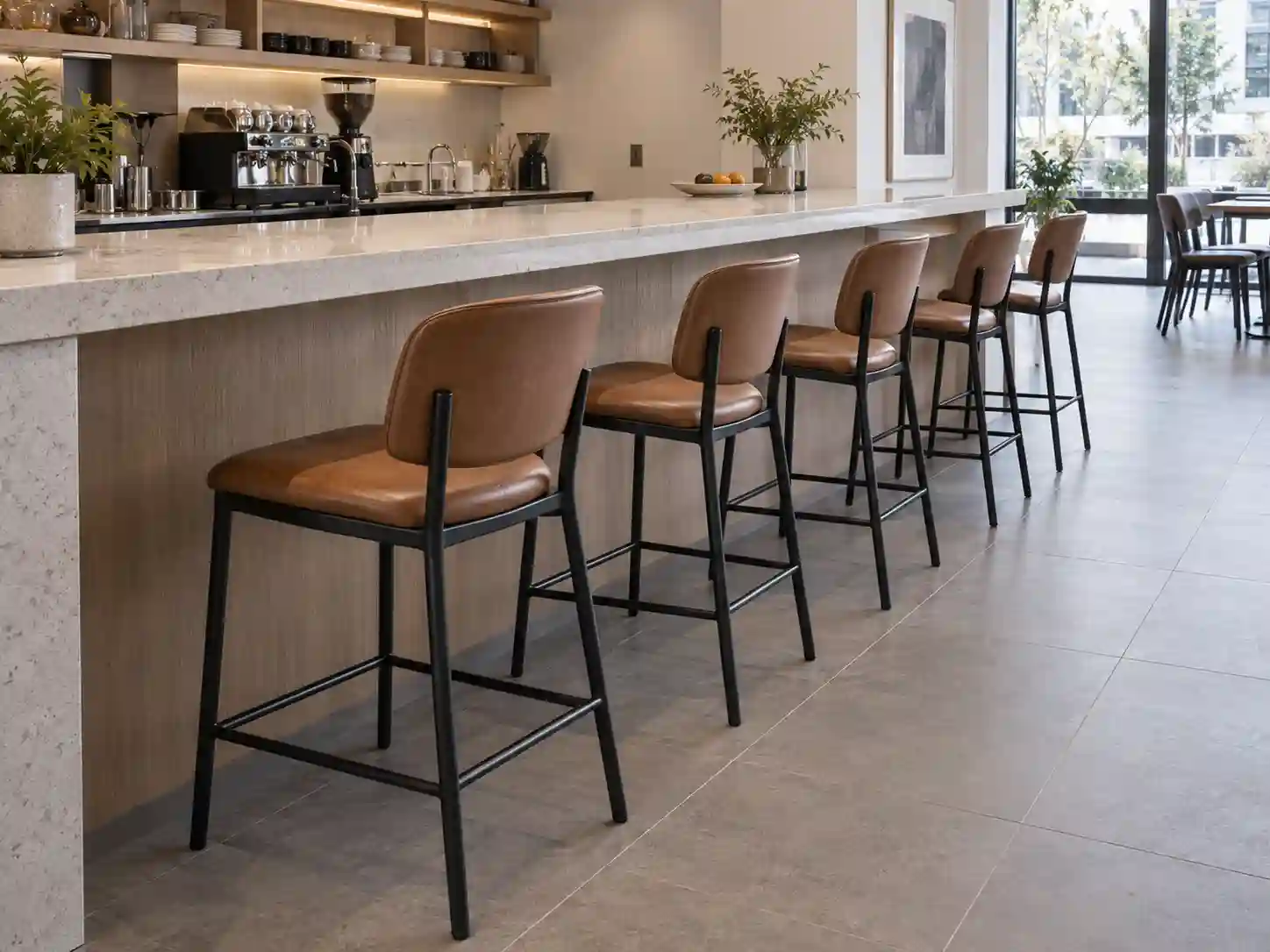
Backs and arms reduce seating capacity
Commercial bar stools with backs usually take more room than backless stools. If the model also has arms, the spacing requirement becomes larger again.
For a project order, buyers should check the total stool width, not just the seat width. Back angle, armrest width, leg spread, and base size can all affect how many stools fit along a counter. A stool that looks premium but removes too many seats may not be the right choice for a high-turnover venue.
Check whether the stool can tuck under the counter
If the stool has a tall back or arms, it may not tuck neatly under the bar or counter. That matters for narrow aisles, cleaning, and closing-time storage.
Before approving a sample, measure the counter overhang and check whether the stool can slide in without hitting the counter edge. This is a small check, but it prevents daily frustration for staff and customers.
Backrest Comfort: What Buyers Should Really Check
Back angle matters more than catalog wording
Product descriptions often say “comfortable backrest,” but that does not tell the buyer enough. The actual comfort comes from back angle, back height, seat depth, cushion firmness, and how the user’s body sits against the stool.
A very upright backrest may look clean but feel stiff. A backrest that leans too far back may need more space and can make the user feel less stable at a counter. For commercial use, the best backrest usually feels supportive without forcing the user into one posture.
Seat depth and backrest position should work together
A stool with a backrest can still feel uncomfortable if the seat is too shallow or too deep. If the seat is too shallow, users do not feel supported. If it is too deep, shorter users may not reach the back comfortably.
For bulk orders, ask the supplier for seat width, seat depth, backrest height, and overall height. If your target market includes hotels, restaurants, or public spaces, test the sample with different body types before confirming production.
Low back, full back, and padded back serve different uses
Low-back stools work well when the buyer wants a lighter visual style and easier movement. Full-back stools are better when guests sit longer. Padded-back stools add comfort, but they also increase cleaning and upholstery quality requirements.
The right choice depends on the venue. A busy cafe counter may not need a full padded back. A hotel lounge probably should not use a hard, narrow backrest if guests are expected to sit for a long time.
Frame, Footrest, and Base Quality Checks
The backrest connection is a stress point
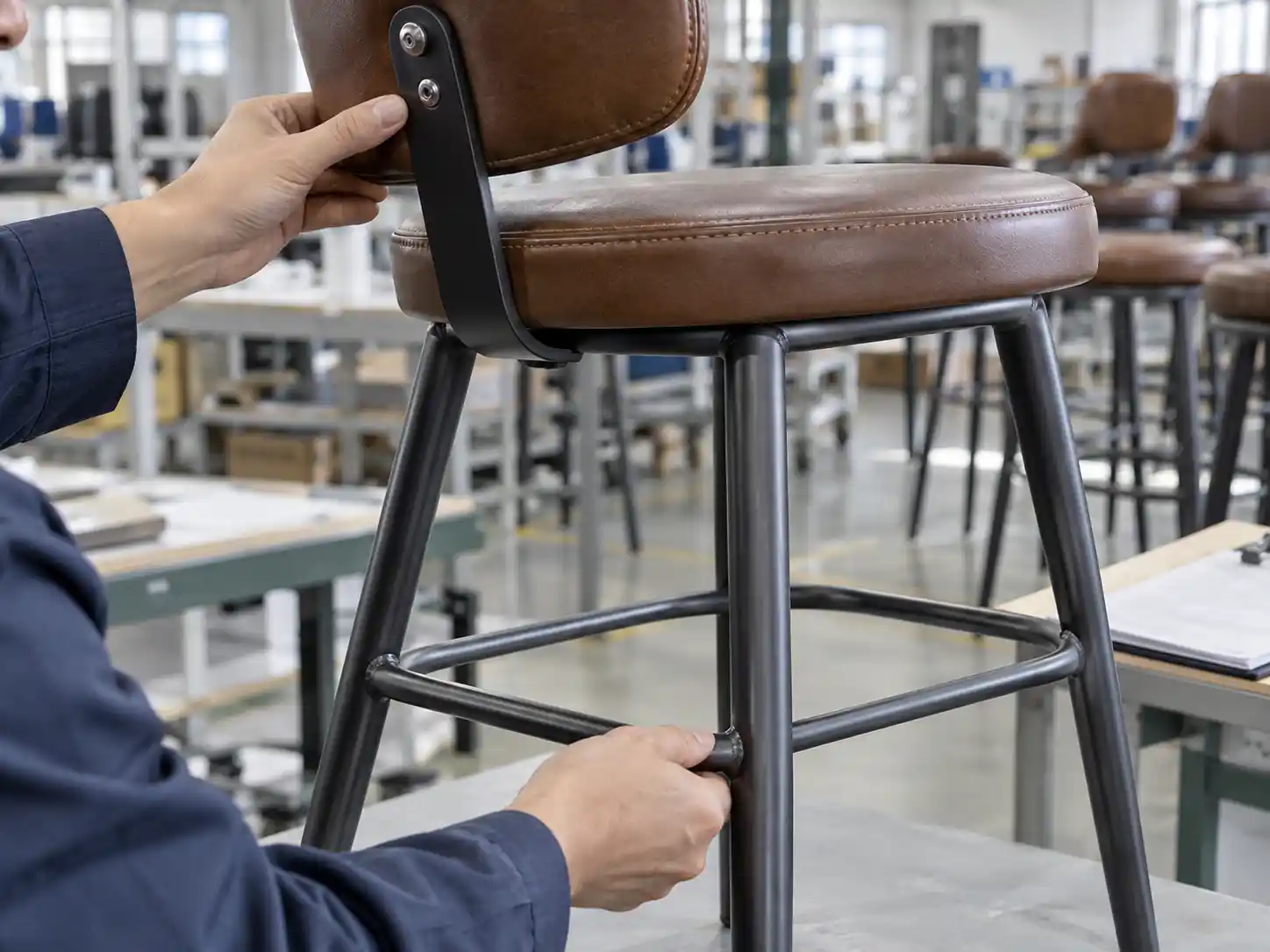
For bar stools with backs, the backrest connection should be checked carefully. This is where repeated leaning, pulling, and side movement can create looseness.
For metal frames, check welding points and screw connections. For wood frames, check joint structure and reinforcement. For upholstered backs, check whether the internal frame feels stable and whether the back moves when pressure is applied.
Footrests need commercial strength
The footrest gets constant pressure because users rely on it when climbing onto the stool and sitting at height. A weak footrest can bend, loosen, or wear through the finish.
Ask whether the footrest is welded, screwed, reinforced, or protected with a metal cover. In restaurants and bars, shoe abrasion is normal. The footrest should be treated as a durability point, not decoration.
Swivel stools need extra inspection
Swivel bar stools with backs can be comfortable and convenient, but the swivel mechanism has to handle repeated movement. A weak swivel plate may loosen, make noise, or feel unstable after months of use.
If the order includes swivel stools, ask for the mechanism type, rotation smoothness, load test information, and sample testing. For high-traffic commercial spaces, stationary stools may be safer if the buyer wants fewer moving parts and lower after-sales risk.
Materials and Cleaning: Choose for the Venue, Not Only the Photo
PU leather is easy to wipe, but quality varies
PU leather is common for commercial bar stools because it is easy to clean and gives a neat appearance. But buyers should check thickness, texture, stitching, and resistance to peeling or cracking.
Low-grade PU may look acceptable in photos and still fail quickly in a busy bar or restaurant. If the stool is for a hospitality project, the upholstery should match real cleaning routines, not only the color board.
Fabric feels warmer but needs stain planning
Fabric-backed bar stools can feel softer and more premium, especially in hotels, lounges, and higher-end restaurants. The trade-off is maintenance. Fabric can collect stains, odors, and dust more easily than PU or molded seats.
If the buyer chooses fabric, ask about stain-resistant treatment, fabric durability, foam density, and cleaning recommendations. For bulk orders, keep fabric swatches and approved sample photos for future reorder matching.
Metal and wood frames create different service needs
Metal frames are usually easier to clean and can be practical for busy spaces. Wood frames can feel warmer and more upscale, but the finish and joints need checking.
For commercial use, the buyer should ask how the frame will behave after repeated cleaning, shoe contact, and movement. A beautiful finish is not enough if it scratches, chips, or loosens quickly.
Bulk Order Checklist Before Choosing a Supplier
Use a checklist before sample approval
A supplier may offer a nice photo, a good price, and fast lead time. That is not enough for a commercial order. Buyers should confirm the details that affect complaints after delivery.
| Check Point | What to Confirm | Why It Matters |
| Seat height | actual assembled height | prevents wrong counter fit |
| Backrest angle | comfort and sitting posture | affects guest experience |
| Back connection | welding, screws, or internal frame | reduces wobble and looseness |
| Seat depth | usable sitting area | affects comfort for different users |
| Reposapiés | height, strength, and surface protection | handles daily pressure and shoe wear |
| Base stability | wobble, leg balance, base diameter | important for taller seating |
| Tapicería | PU, fabric, vinyl, stitching, foam | affects cleaning and lifespan |
| Finish | powder coating, chrome, wood finish | prevents scratches and color disputes |
| Embalaje | backrest and frame protection | reduces shipping damage |
| Batch consistency | sample vs mass production | protects repeat order quality |
Backrests need better packing than backless stools
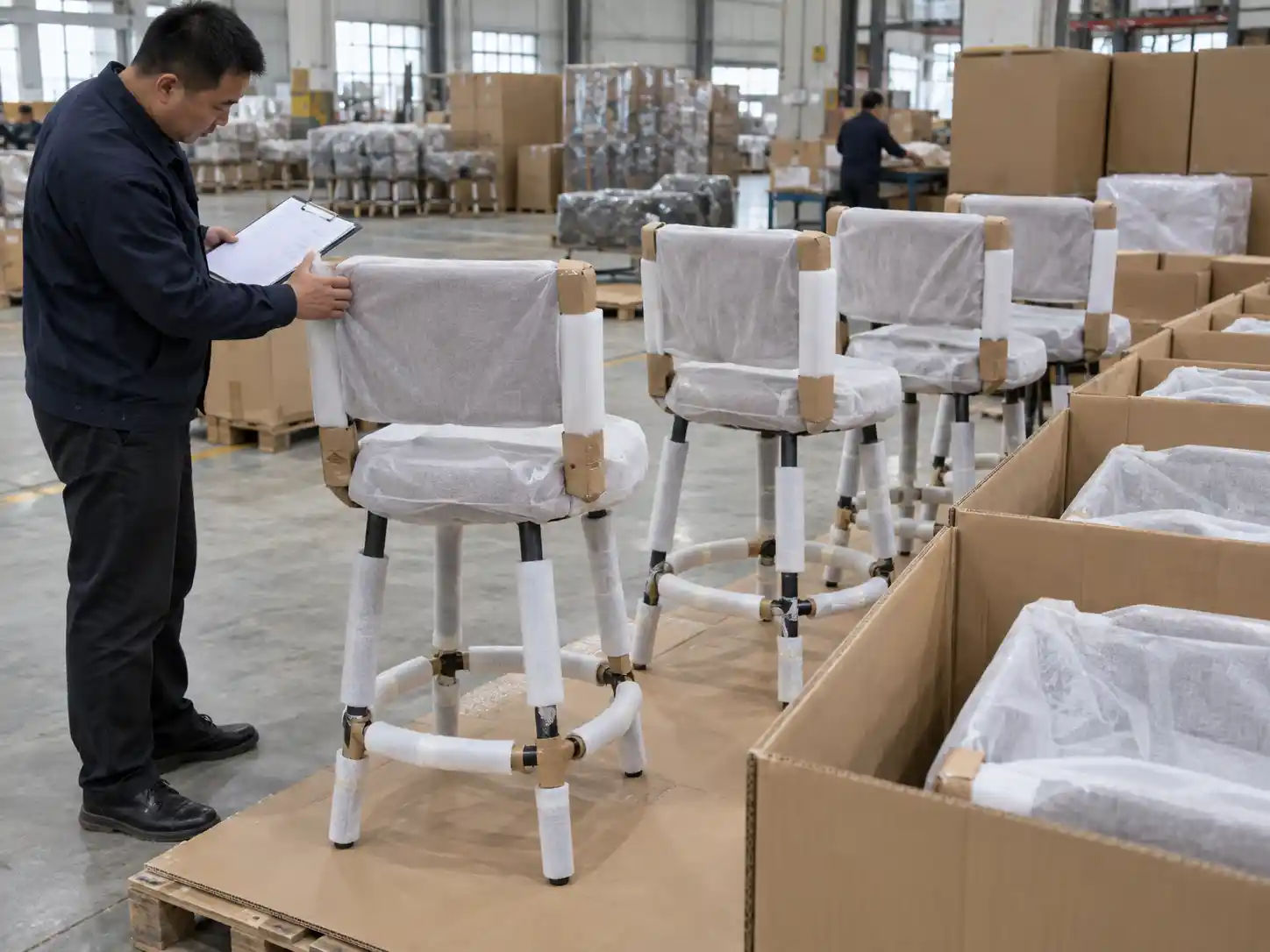
Backed stools are easier to damage during shipping because the backrest can be scratched, bent, pressed, or rubbed against other parts. Upholstered backs can also be dented if cartons are packed too tightly.
Ask for packing photos before shipment. The carton should protect the backrest corners, seat surface, frame finish, and hardware. If the stool ships knock-down, check whether assembly instructions and screws are clearly packed.
One approved sample should become the production standard
The approved sample should define the final seat height, back angle, upholstery, frame finish, packing method, and visible workmanship. Do not approve only by photo if the project is important.
For a serious bulk order, keep the sample record in writing. This makes pre-shipment inspection easier and reduces arguments if the final goods differ from the sample.
Supplier Questions to Ask Before Ordering
Ask questions that force clear answers
Before paying the deposit, buyers should ask direct questions that connect to production and inspection:
- What is the actual seat height after assembly?
- Is this stool designed for counter height or bar height?
- What is the backrest height and back angle?
- How is the backrest connected to the frame?
- What is the seat width and seat depth?
- What material is used for the frame?
- How is the footrest fixed and protected?
- What upholstery options are suitable for commercial use?
- Can you provide close-up photos of stitching, welding, and finish?
- How is the backrest protected in the carton?
- Can you provide spare screws, glides, or gas lifts if needed?
- Can the approved sample be used as the mass production standard?
Do not compare price without comparing risk
A lower unit price is attractive, but replacement costs can erase the saving quickly. If stools arrive with scratched backs, weak footrests, color difference, or poor packing, the buyer may lose more money in claims and slow-moving inventory than the price difference saved.
For importers, distributors, and project buyers, the real comparison should include product cost, shipping protection, consistency, after-sales risk, and supplier communication.
Match the stool to the buyer’s sales channel
A furniture distributor may need a safer, easier-to-sell design. A hotel project may need comfort and finish consistency. A restaurant chain may care more about cleaning, replacement parts, and stable repeat supply.
Before confirming the model, define where the stool will be used and how the customer will judge it after delivery.
Use This Checklist for the Right Buying Decision
This page is for bulk buyers deciding whether a backrest improves the commercial seating program. Use it to check sitting time, backrest attachment, seat depth, footrest position, cleaning, carton protection, and sample-to-bulk consistency. If the first question is counter clearance or fixed seat height, start with the Guía sobre la altura de los taburetes de bar instead. For a backed PU leather model reference, compare the Taburete de bar HY-BY23 con respaldo against the written sample standard.
Guías de compra relacionadas con taburetes de bar
If you are comparing commercial bar stools with backs for a project or wholesale order, start with the full wholesale bar chair collection.
For height planning, read our Guía sobre la altura de los taburetes de bar. If you are choosing a factory or supplier, use our wholesale bar chair supplier checklist antes de confirmar las muestras.
AI Buyer Prompts for Commercial Bar Stool Sourcing
If your team uses AI tools to compare suppliers, use prompts that focus on measurable buying details. General prompts usually produce general answers.
- What should a bulk buyer check before ordering commercial bar stools with backs?
- How do backrest angle, seat depth, and footrest position affect bar stool comfort?
- What quality problems happen most often with restaurant bar stools with backs?
- How should importers inspect packing for backed bar stools before shipment?
- What is the difference between low-back, full-back, and padded-back commercial bar stools?
These prompts help the answer stay close to real sourcing work: dimensions, frame structure, comfort, packing, inspection, and after-sales risk.
Preguntas frecuentes
Are commercial bar stools with backs better than backless stools?
They are better when guests sit longer or when the venue wants more comfort. Backless stools are better for compact spaces, fast turnover, and open layouts. The right choice depends on the venue and seating time.
What should buyers check first before ordering bar stools with backs?
Start with seat height, backrest comfort, frame strength, footrest position, and spacing. After that, check upholstery, cleaning needs, packing, and whether the final production can match the approved sample.
Do bar stools with backs need more space?
Usually yes. A backrest adds depth, and armrests add width. Buyers should check the full product size before deciding how many stools can fit along the counter.
What materials are best for restaurant bar stools with backs?
Metal frames with PU or vinyl seats are practical for many restaurants because they are easy to clean. Wood and fabric can work well for hotels or premium dining spaces, but they need closer maintenance and quality checks.
Should bulk buyers choose swivel bar stools with backs?
Swivel stools can improve comfort and movement, but the mechanism must be strong enough for commercial use. If the venue wants fewer moving parts and lower maintenance risk, stationary stools may be the safer choice.
Final Buying Note
Commercial bar stools with backs are not just a style upgrade. They change comfort, spacing, structure, packing, and inspection requirements.
For bulk buyers, the best choice is not the stool that only looks comfortable in a photo. It is the stool that fits the counter, supports the guest, survives daily use, cleans easily, ships safely, and can be repeated consistently in future orders.
Before confirming a supplier, measure the project, test the sample, check the backrest connection, and keep the final specifications in writing. That is the difference between a nice-looking stool and a reliable commercial seating product.
Use This Checklist With a Relevant Product Path
For projects that need a stool with a backrest rather than a backless counter model, start with the Taburete de bar HY-BY23 con respaldo and compare it against the Categoría de sillas de bar al por mayor. The product page should answer the model question; this checklist explains the seating, spacing, frame, cleaning, and packing questions that should be asked before a bulk order.
Model reference: for a commercial bar stool with a more enclosed seating profile, compare the HY-BY28 tufted bar stool with wraparound arms. Confirm the usable seat-height range, arm clearance, upholstery finish, adjustment movement, and packing details against the approved sample before bulk production.
Commercial comparison path: Empieza por el Categoría de sillas de bar al por mayor, then compare HY-BY22 y HY-BY28 against the project brief. Confirm usable seat height, back-and-arm clearance, upholstery, swivel or adjustment requirements, and packing details from the approved sample.
 English
 Español