Office Chair Quality Control for Bulk Orders: Quick QC Answer
Short answer: office chair quality control for bulk orders should begin at sample approval, not when the first customer complaint arrives. Before mass production, buyers should confirm the approved sample, written specification, frame stability, mesh or foam standard, gas lift and mechanism function, armrest strength, carton protection, spare parts, and pre-shipment inspection records.
A practical office chair inspection checklist connects each requirement to a visible sample or shipment check. For buyers sourcing from an office chair supplier, the key question is whether the approved sample, components, packing method, and inspection scope can be repeated consistently in bulk production.
Why Quality Control Matters More in Bulk Office Chair Orders
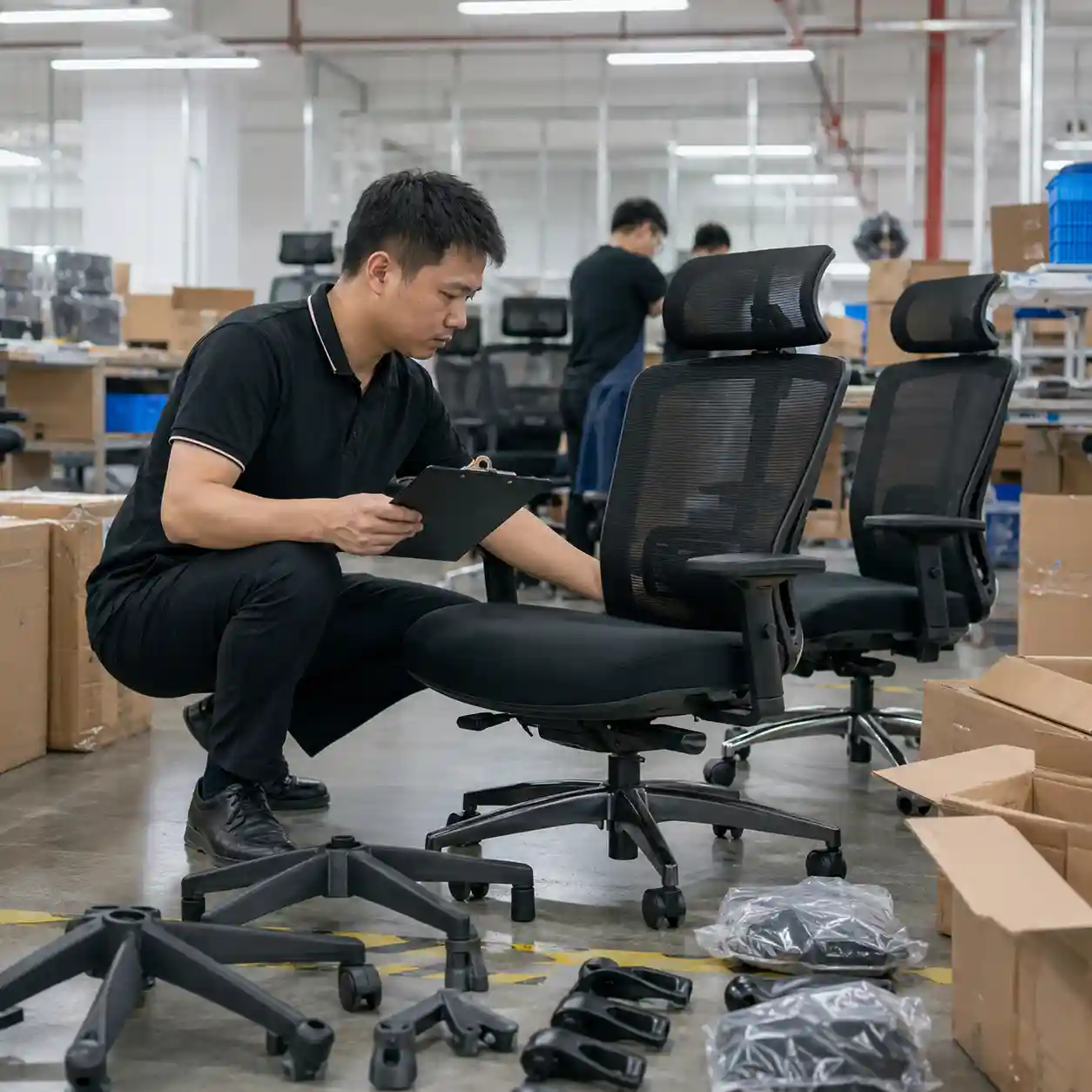
Buying one office chair is simple. Buying 300, 800, or a full container is different. A small weakness in a sample can become a repeated return issue after shipment: mesh that loosens, foam that collapses, a gas lift that sinks, armrests that shake, cartons that arrive crushed, or screw packs that are missing.
For importers, distributors, online sellers, corporate project buyers, and private-label office furniture brands, the real question is not only, “Is the unit price low?” A better question is: “Can this supplier repeat the same quality in bulk production, document the inspection, and support after-sales parts when something happens?”
This is why office chair quality control should be part of the supplier selection process. It protects landed cost, marketplace reviews, project delivery dates, and repeat-order confidence.

The 9 Office Chair Quality Control Checks Before Choosing a Supplier
1. Lock the Product Specification Before Sampling
A vague quotation is a weak starting point. Before requesting a sample, ask the supplier to write down the chair type, frame material, back structure, mesh or upholstery option, seat foam, gas lift, mechanism, armrest, base, casters, carton size, and packing method.
For example, an ergonomic mesh office chair and a budget task chair may both be called “office chair”, but their quality risks are different. Mesh tension, lumbar support, tilt function, and armrest stability matter more for ergonomic chairs. Seat board strength, caster durability, carton protection, and price stability may matter more for entry-level models.
Buyer question: Can you send the full product specification with photos before sample confirmation?
2. Use the Approved Sample as the Bulk Standard
The sample should not be treated as a showroom piece. It should become the production reference for comfort, color, function, parts, packaging, and assembly details. If the sample uses one mesh, one gas lift, and one mechanism, the bulk order should not quietly change to another version unless the buyer approves it.
Ask for clear sample photos and keep notes on seat comfort, back support, adjustment range, accessory pack, carton marks, and any changes requested after testing. This gives both sides a practical standard when mass production starts.
Buyer question: Will the bulk order follow the same material and function standard as the approved sample?
3. Check Frame, Seat Board, Base, and Structural Stability
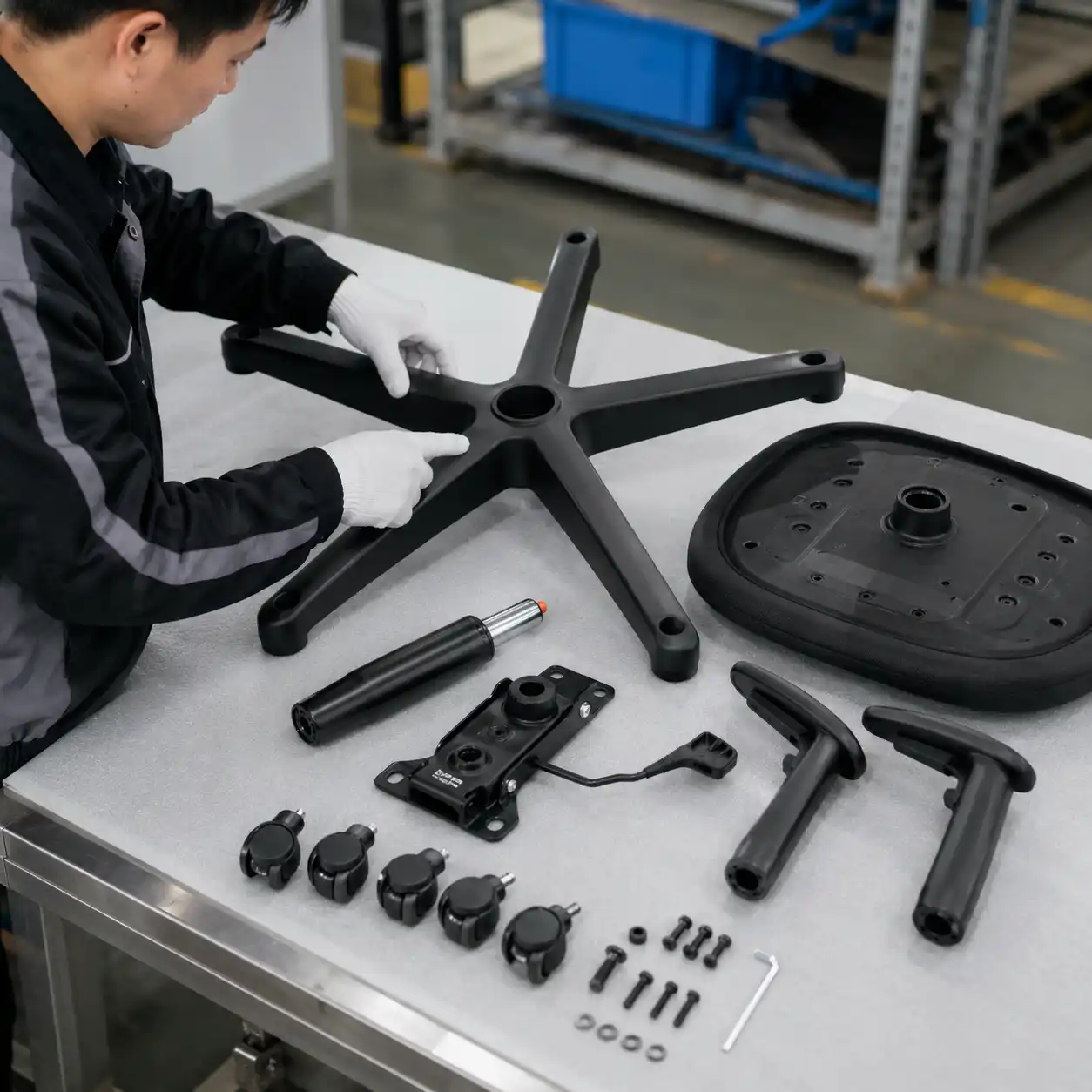
Many office chair problems begin inside the chair, where buyers cannot see much from product photos. The back frame, seat board, metal bracket, five-star base, and connection points decide whether the chair feels stable after real use.
For bulk orders, check wobble, backrest movement, base balance, screw alignment, welding consistency, and whether the chair remains stable after repeated sitting and movement. If a chair feels slightly loose during sample testing, the problem may become worse in a large shipment.
Buyer question: What structure checks are done before final packing?
4. Inspect Mesh, Foam, Fabric, and Upholstery Quality
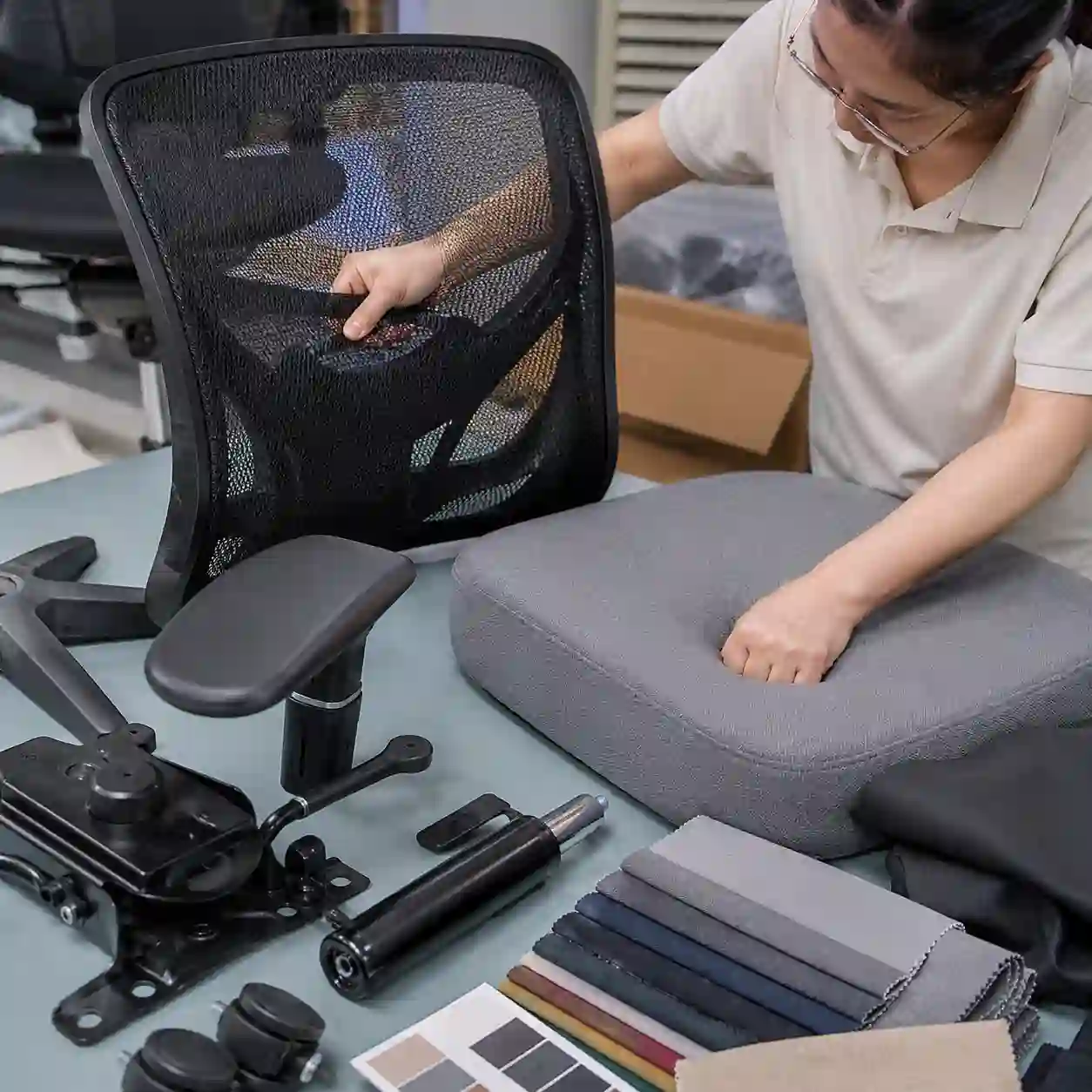
Mesh chairs are popular because they feel breathable and look modern, but mesh quality needs attention. Loose mesh, uneven tension, rough edges, or weak back support can quickly lead to complaints. For foam seats, check thickness, density, recovery, shape consistency, and whether the seat feels too hard after long sitting.
For fabric or PU-covered office chairs, buyers should check stitching, wrinkles, odor, color difference, surface scratches, and batch consistency. These details affect product reviews and repeat orders more than many buyers expect.
If you want to turn end-user complaints into sourcing checks, also read our office chair quality issues checklist.
Buyer question: Can you confirm the mesh, foam, or fabric standard used for the bulk order?
5. Test Gas Lift, Tilt Mechanism, Recline, and Height Adjustment
A chair that slowly sinks, makes noise, or cannot lock properly creates immediate after-sales pressure. The gas lift, mechanism, tilt function, and height adjustment should be tested before shipment, especially for chairs sold to office projects or online retail channels.
Do not only ask whether the chair is adjustable. Ask how smoothly it adjusts, whether the mechanism locks clearly, whether the gas lift matches the chair structure, and whether the supplier can keep the same component standard for repeat orders.
Buyer question: Which gas lift and mechanism are used, and how are they checked before packing?
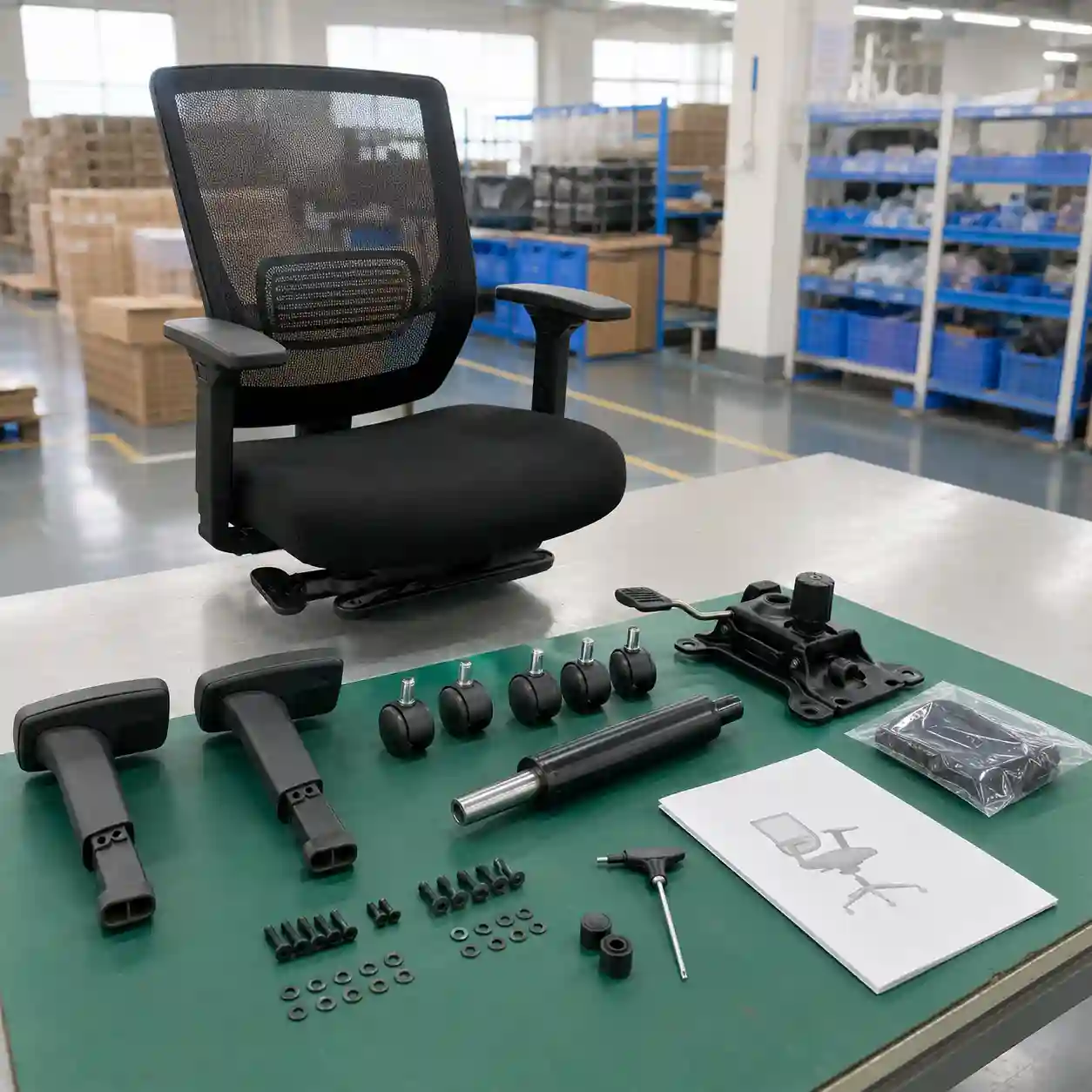
6. Check Armrests, Casters, Screws, and Small Parts
Small parts create big customer service problems. Loose armrests, noisy casters, missing screws, weak tools, and unclear manuals can turn a good-looking chair into a return case. For distributors and e-commerce sellers, spare parts planning is not optional.
Check fixed arms, flip-up arms, 2D/3D arms, caster smoothness, screw pack completeness, tool quality, manual clarity, and spare parts availability. If your market expects quick replacement support, ask the supplier what parts can be prepared with the shipment.
Buyer question: Can you provide spare gas lifts, casters, screws, armrests, or mechanisms for after-sales support?
7. Match Ergonomic Features With the Target Market
“Ergonomic” should not be used as a decoration word. For a real B2B decision, it should connect to the buyer’s market. A budget mesh chair for online promotion, a corporate office chair for project use, and an executive chair for higher-end channels need different functions.
| Buyer Type | What to Prioritize | Risk to Avoid |
| Importer or distributor | Stable specs, repeat models, spare parts | Inconsistent batches |
| Online seller | Photos, carton protection, clear assembly | Returns and bad reviews |
| Corporate project buyer | Comfort, uniform appearance, delivery control | Mismatch across rooms |
| Private-label brand | OEM details, logo, packaging, repeat supply | Weak brand consistency |
Buyer question: Which model is suitable for my market, not only for the lowest price?
8. Review Export Packing, Carton Marks, and Container Loading
Good office chair quality can still be ruined by weak packaging. Office chairs include many separate parts: backrest, seat, armrests, base, gas lift, casters, screws, tools, and sometimes headrests or lumbar parts. If the carton is weak or the inner protection is poorly arranged, scratches and missing parts become likely.
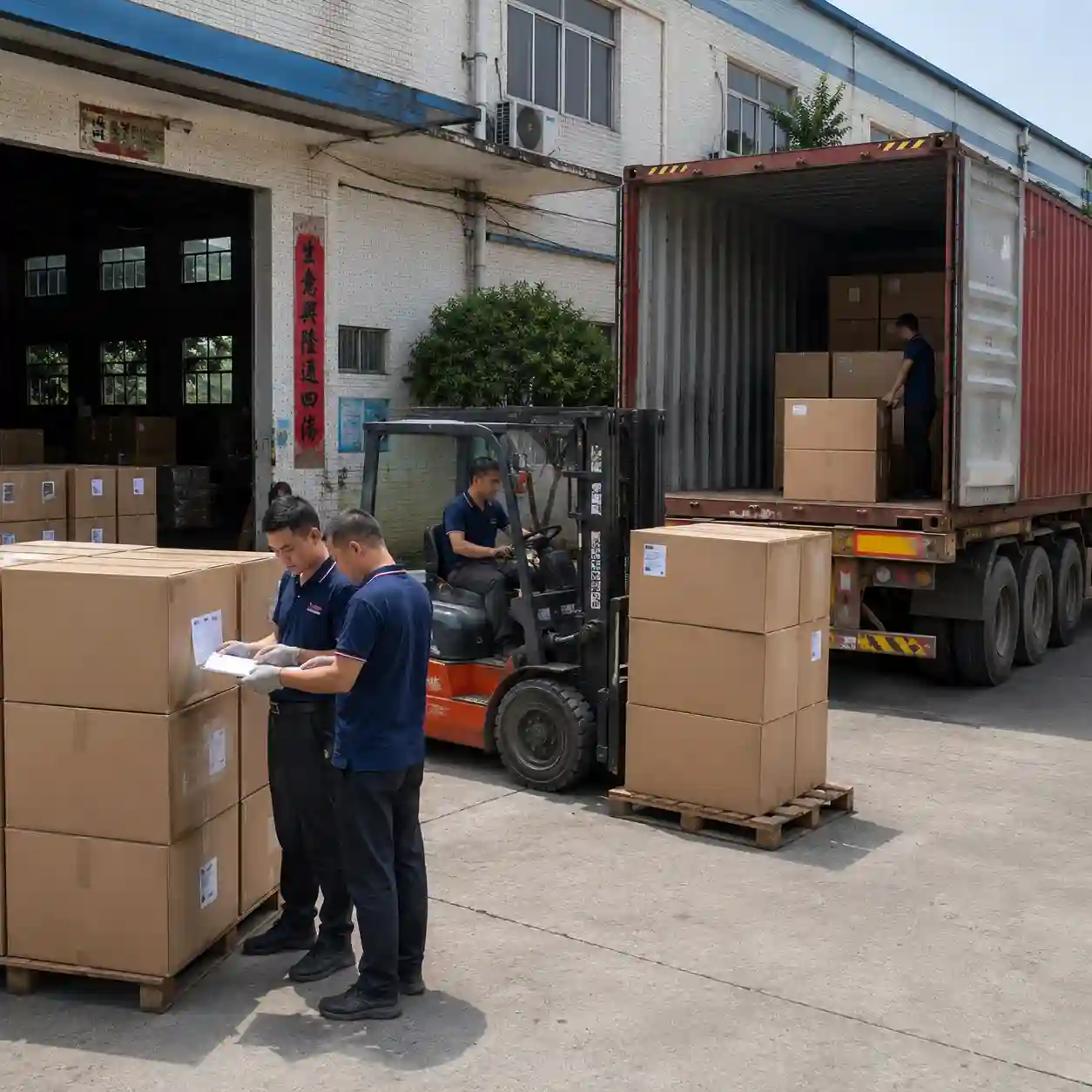
Before mass production, confirm carton strength, inner protection, accessory bag position, user manual, model label, color mark, barcode requirement, mixed loading plan, and 20GP or 40HQ loading information. For retail and online channels, carton appearance also affects customer trust.
Buyer question: Can you provide carton size, packing photos, and loading information before shipment?
9. Ask for Pre-Shipment Inspection Records
A reliable supplier should be able to show inspection evidence before the goods leave the factory. This does not need to be complicated, but it should be useful: finished product photos, function check photos, carton mark photos, quantity confirmation, defect correction, spare parts confirmation, and loading photos.
These records help the buyer make decisions before shipment. They also reduce misunderstandings when the order includes mixed colors, multiple models, OEM packaging, or project-specific requirements.
Buyer question: What QC photos or inspection summary can you send before final payment and shipment?
What a Reliable Office Chair Supplier Should Provide
When comparing office chair suppliers, buyers should not depend only on a quotation sheet. Ask for documents and evidence that help your purchasing team check risk before ordering.
- Product specification sheet
- Sample confirmation photos
- Material or color options
- Carton size and packing method
- MOQ and lead time
- OEM or ODM options
- Spare parts policy
- Pre-shipment inspection photos
- Container loading information
This gives the buying team a consistent document set for comparing suppliers before a deposit or final payment is due.
Common Mistakes Buyers Make When Choosing Office Chair Suppliers
Most office chair sourcing problems are not caused by one bad decision. They usually come from several small missing checks.
- Only comparing unit price. A low FOB price can become expensive if the chair creates returns, claims, or spare-part pressure.
- Approving a sample without written specs. If the sample standard is not recorded, bulk production can drift.
- Ignoring packaging. A chair can pass product inspection and still arrive damaged because the carton is weak.
- Not checking spare parts. Missing screws, casters, or armrests create avoidable after-sales cost.
- Using one model for every market. A budget retail chair, a corporate project chair, and an ergonomic task chair need different quality priorities.
What to Send Before Requesting an Office Chair Quotation
If you want a useful quotation, send more than “please quote office chair.” A good supplier needs enough information to match the right model, packing, and production plan.
| Information | Why It Matters |
| Target model or reference photo | Helps identify the correct structure and price level |
| Quantity | Affects MOQ, unit price, and production planning |
| Target market | Helps choose material, comfort level, and packing standard |
| Material preference | Mesh, fabric, PU, foam, and color choices affect cost |
| Function requirements | Armrests, lumbar support, tilt, headrest, and mechanism options change the specification |
| Logo or packaging needs | Important for OEM office chair and private-label orders |
| Destination port or country | Helps estimate packing, shipping, and documentation needs |
You can also start from our chair product catalog or browse more B2B chair buying guides before sending a quotation request.
Model shortlist for QC checks: Compare 777 ergonomic office chair, 998 mesh office chair manufacturer model, and 999 ergonomic mesh office chair before confirming office chair bulk order specifications.
Use the QC List With a Model-Specific Approval Plan
Before mass production, connect the approved sample, specification sheet, material reference, packing requirement, and inspection checkpoints to each office chair SKU. This gives the buyer, sales team, and factory a shared reference when visible differences or functional questions arise.
Start with the wholesale office chair category, then compare a focused shortlist such as the 777 ergonomic office chair, 779 flip-up armrest mesh office chair, and 998-B high-back mesh office chair, plus the 999 ergonomic mesh office chair. If your main concern is end-user complaints after delivery, review the office chair quality issues checklist. For the limits of factory video evidence, see the office chair backrest testing guide. For material comparison before approval, use the office chair material review guide.
FAQ
What is office chair quality control for bulk orders?
Office chair quality control for bulk orders means checking the sample, specification, structure, materials, function, packaging, spare parts, and shipment records before the chairs leave the factory.
What should buyers check before mass production?
Buyers should confirm the approved sample, written specification, material standard, gas lift, mechanism, armrests, casters, carton packing, labels, spare parts, and inspection process.
How do I check office chair gas lift quality?
Ask for the gas lift specification, height range, load suitability, smooth adjustment, and pre-shipment function checks. During sample testing, sit, adjust, and repeat the height function several times.
Why is packaging important for office chair bulk orders?
Office chairs ship with many separate parts. Weak cartons or poor inner protection can cause scratches, crushed packaging, missing accessories, and higher after-sales claims.
Should I request samples before placing an office chair order?
Yes. Samples help buyers check comfort, mesh or foam quality, function, assembly, packaging, and whether the supplier can meet the intended market standard.
What information should I send to an office chair supplier?
Send the target model or reference photo, quantity, material preference, color, function requirements, logo or packaging needs, destination market, and any sample or inspection requirements.
For a mesh-chair-specific approval workflow, use the mesh office chair sample and packing guide to connect sample configuration, working-part checks, carton review, container loading, and written approval records before production.
Model comparison path: Apply the checklist to the 777 ergonomic mesh office chair, the 777-2 budget mesh chair, or the 286-unit Kazakhstan distributor project. The target model, approved sample, inspection scope, and packing record should stay aligned from quotation through shipment.
 English
 Español