Start With the Buying Scenario, Not the Product Photo
The same mesh office chair can suit a value-focused distributor, a training-room contractor, or a corporate project in very different ways. Before asking for a sample, define the target market, expected quantity, preferred feature level, destination, packaging requirements, and whether the order will use one model or a mixed container.
This first step prevents a common sourcing problem: approving a sample that looks suitable on its own but does not match the final material, packing, or commercial position. A compact, high-loading programme may begin with the 777-2 budget mesh office chair. A buyer who needs more adjustment options may instead review the 779 mesh office chair or the 788 adjustable lumbar mesh office chair.
Before sampling, prepare a short brief that covers the following:
- Target customer and intended use
- Expected quantity and order structure
- Preferred mesh, foam, armrest, lumbar, base, and castor configuration
- Required colour, carton mark, label, manual, or private-label details
- Destination country or port and expected delivery timing
- Sample, inspection, and spare-parts expectations
Review the Sample as a Bulk-Order Reference
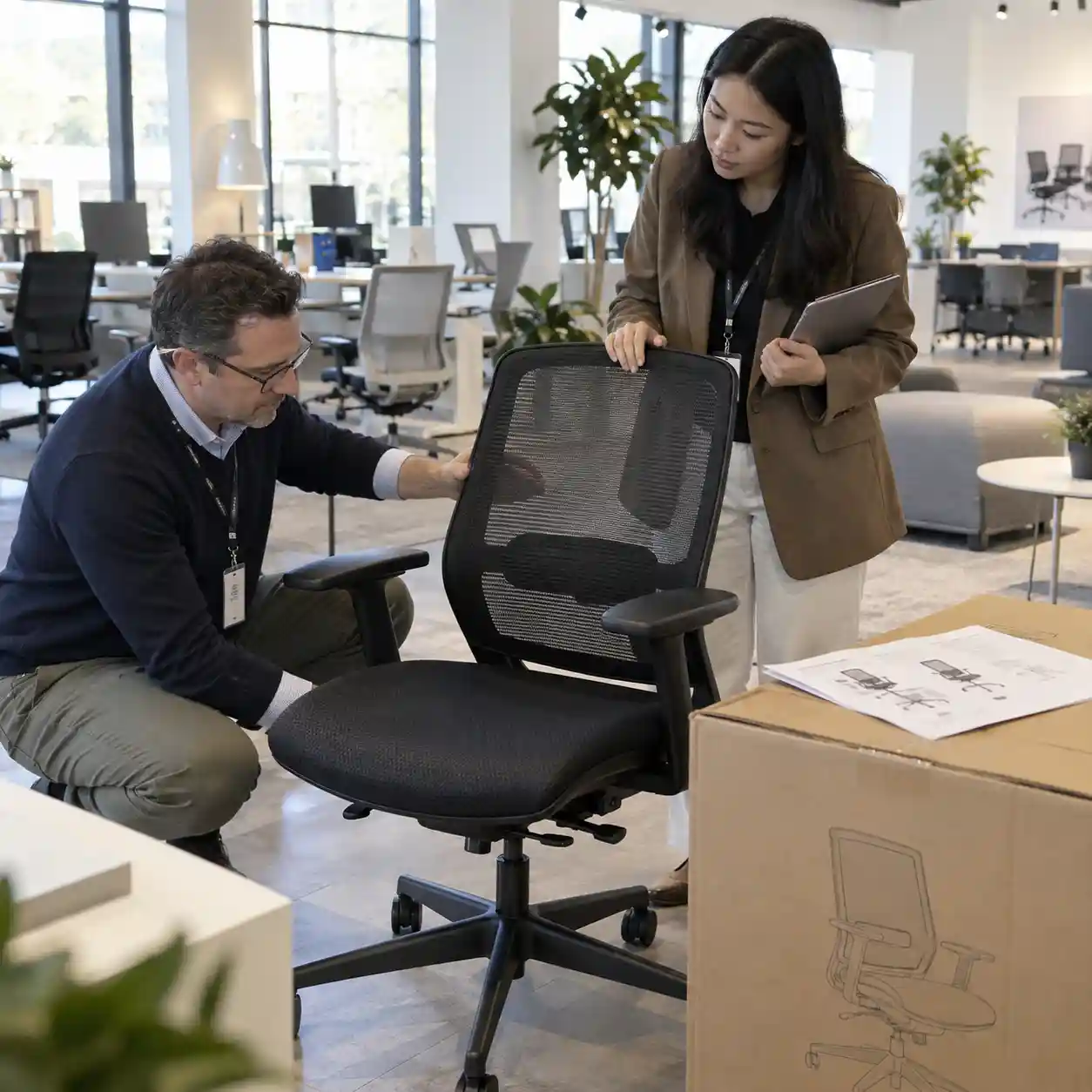
A sample should not be treated as a showroom object. It should become the reference for the version that the buyer expects to receive in bulk. Test the chair as an end user would: adjust the height, move the armrests, lean back where the mechanism allows it, roll the castors on a level floor, and check whether the chair feels stable in normal use.
For mesh office chairs, review mesh tension, seat support, back-frame alignment, armrest fitting, lumbar position, gas-lift movement, mechanism operation, base balance, castor movement, screws, and assembly instructions. The goal is not to demand a zero-tolerance product. It is to identify the details that matter for the intended market and record them before production begins.
When after-sales risk is a concern, use the Office Chair Quality Issues checklist alongside the sample review. It turns common user complaints into practical supplier questions.

Check the Parts That Create After-Sales Risk
Many complaints come from working parts rather than the overall appearance. Mesh and foam should be checked for consistency with the approved sample. Armrests should feel securely fitted and have usable clearance under the intended desk height. Lumbar support should be assessed by its position and adjustment range, not merely by the fact that it appears on a specification sheet.
The gas lift, mechanism, base, and castors work as a system. A smooth gas lift does not correct an unstable base, and a strong-looking base does not solve rough castor rolling or a noisy mechanism. If the selected model has a detailed back-support structure, the Office Chair Backrest Testing guide provides a useful additional review path.
Turn Sample Feedback Into a Written Approval File
“Sample looks good” is not a usable production instruction. After review, create one approval file that gives the buyer, supplier, and inspection team the same reference point. Group revision comments into one clear round instead of scattering changes across messages and photographs.
| Approval item | What to record |
| Model reference | Model name, approved sample photos, and final configuration |
| Materials and parts | Mesh, foam, colour, armrests, lumbar, mechanism, base, and castors |
| Packaging | Carton size, inner protection, hardware kit, labels, and instruction sheet |
| Inspection | Function checks, appearance checks, carton checks, and acceptance notes |
| After-sales planning | Required spare parts and the agreed support process |
This record protects both sides. It is easier to compare a finished chair with an approved reference than with an informal conversation from several weeks earlier.
Review Cartons Before You Confirm the Order
For a bulk office chair order, packaging is part of the product. Mesh office chairs usually ship with separate backrests, seats, armrests, bases, gas lifts, castors, screws, and tools. A good chair can still arrive with scratched components, missing hardware, or difficult assembly if inner protection and carton planning are treated as an afterthought.
Before production is finished, confirm the final carton dimensions, outer-carton condition, component separation, hardware-kit position, instruction-sheet language, labels, and destination marks. If a buyer requires branded cartons, barcodes, additional protection, or a modified manual, check whether those details change the packing plan.
Compare Container Loading From Actual Packed Cartons
Container loading should be calculated from the final packed carton, not from a chair photo or an early estimate. Compare carton length, width, and height; the number of cartons per container; whether the order is mixed-model; and whether branded packaging or additional protection changes the carton size.
High loading can improve freight efficiency, but it is not the only decision point. A lower-loading model may still be appropriate when it offers a different support level, material position, or market fit. Use the loading figure as part of the total commercial decision, then confirm it again after the final specification and carton plan are agreed.
Protect Sample-to-Bulk Consistency
The key question is not whether one sample performs well. It is whether the approved version can be repeated across the order. The approval file should identify the details that cannot change without written confirmation, such as mesh colour, seat material, armrest type, lumbar configuration, base, castors, carton artwork, and manual requirements.
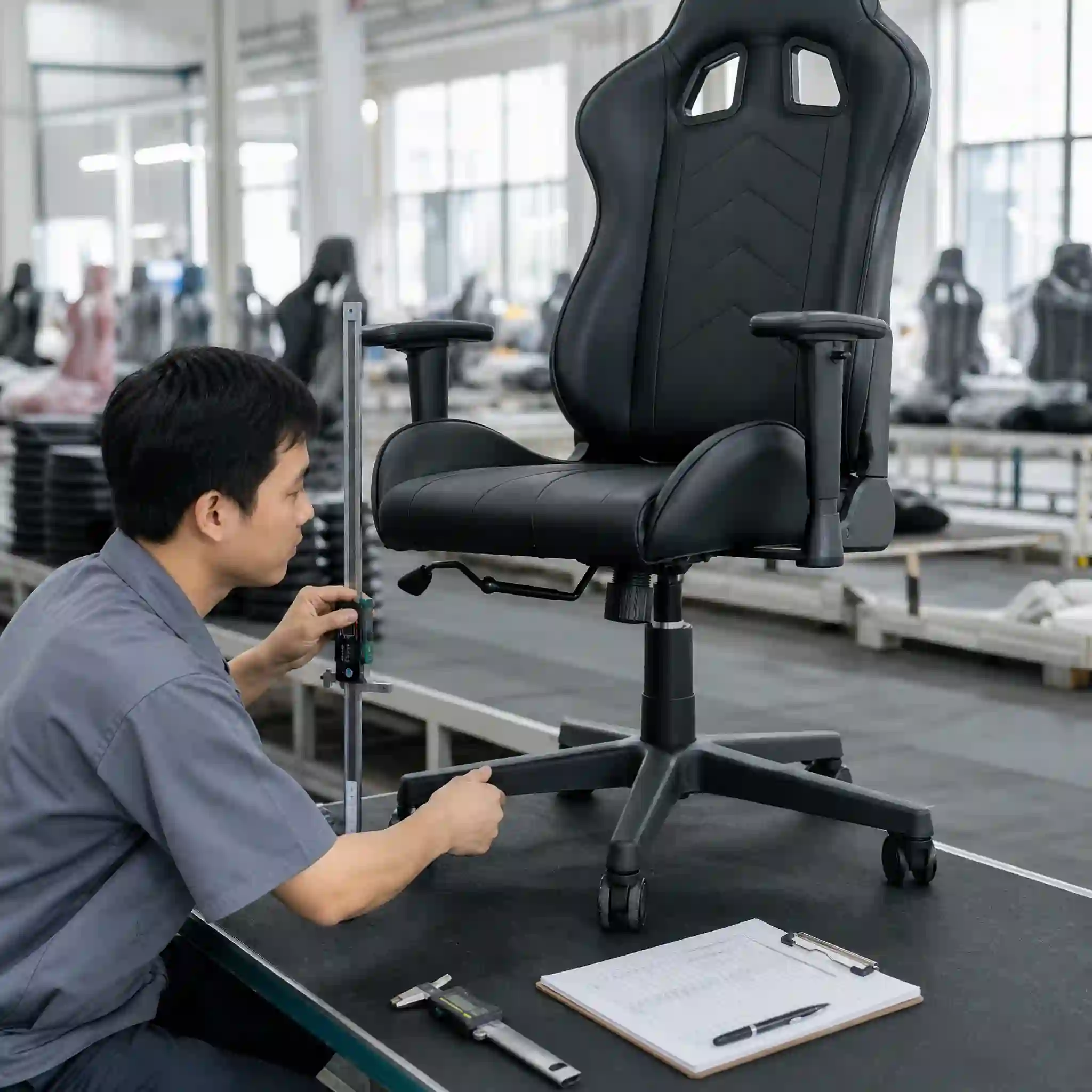
Agree in advance what evidence is useful during production. Depending on the order, that may include component confirmation, early assembly photos, carton and label photos, random functional checks, final inspection notes, and loading photos. Each record should answer a specific approval question. A large number of generic factory photos is less useful than a small set of evidence tied to the approved specification.
Plan Inspection and Spare Parts Early
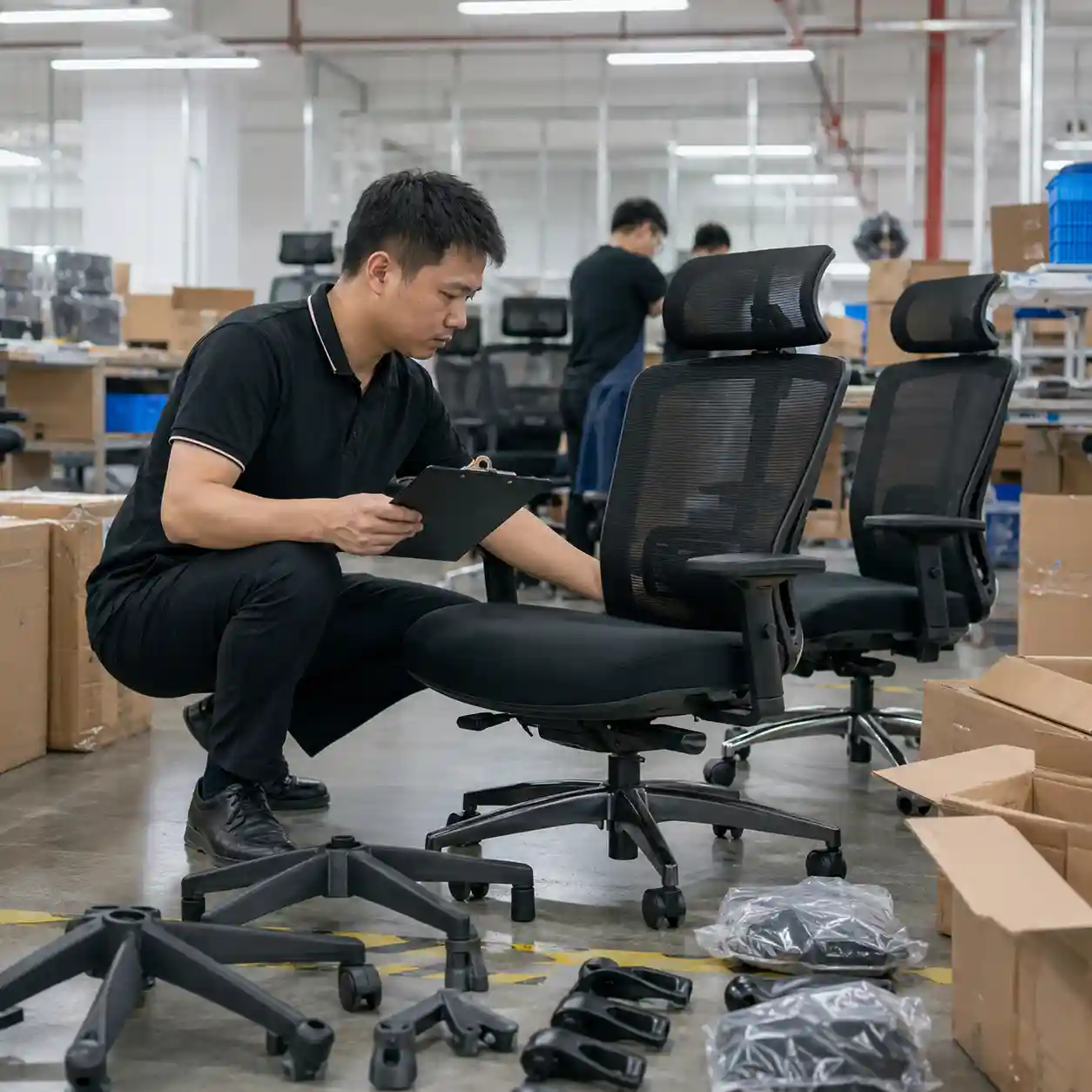
Inspection should not begin only after a problem is reported. Before shipment, agree which appearance and function points will be checked: mesh condition, seat and back-frame alignment, armrest fitting, gas-lift movement, mechanism operation, base balance, castor rolling, hardware completeness, carton condition, and labels.
For distributors and commercial projects, discuss common replacement items before the order is finalised. The right spare-parts plan depends on the selected model and target market. It should be discussed case by case rather than copied from another chair programme.
Useful Office Chair Comparison Paths
Buyer Inquiry Checklist
To receive a useful sample proposal or quotation, send the supplier the target model or reference image, expected quantity, target market, destination country or port, material and colour preferences, required packaging or branding details, inspection expectations, and expected delivery timing. A clear starting brief makes it easier to align the sample, packing plan, and production follow-up.
FAQ
Should I request a sample before ordering mesh office chairs in bulk?
For a first order, a sample is a practical way to check comfort, materials, components, function, assembly, and packing direction. It should represent the intended bulk configuration as closely as possible.
What should I check first on a mesh office chair sample?
Start with mesh tension, seat support, armrest fitting, lumbar position, gas-lift operation, mechanism movement, base balance, castor rolling, hardware completeness, and packaging details.
Is the highest container-loading figure always the best choice?
No. Loading efficiency matters, but it should be considered with the chair’s feature level, target market, carton protection, and expected selling position.
What should be recorded after sample approval?
Record the approved model, materials, components, colour direction, packaging requirements, labels, instruction-sheet needs, inspection points, and any agreed changes.
Can one sample guarantee bulk-order consistency?
No. The sample is a reference point. Consistency also depends on written approval, component control, production follow-up, inspection, and clear packing requirements.
Final Recommendation
For B2B buyers, a mesh office chair order is strongest when the sample, written approval, packing plan, and loading calculation all describe the same final product. Treat those steps as one decision process before production starts, not as separate tasks after the quotation is accepted.




 English