Quick Answer
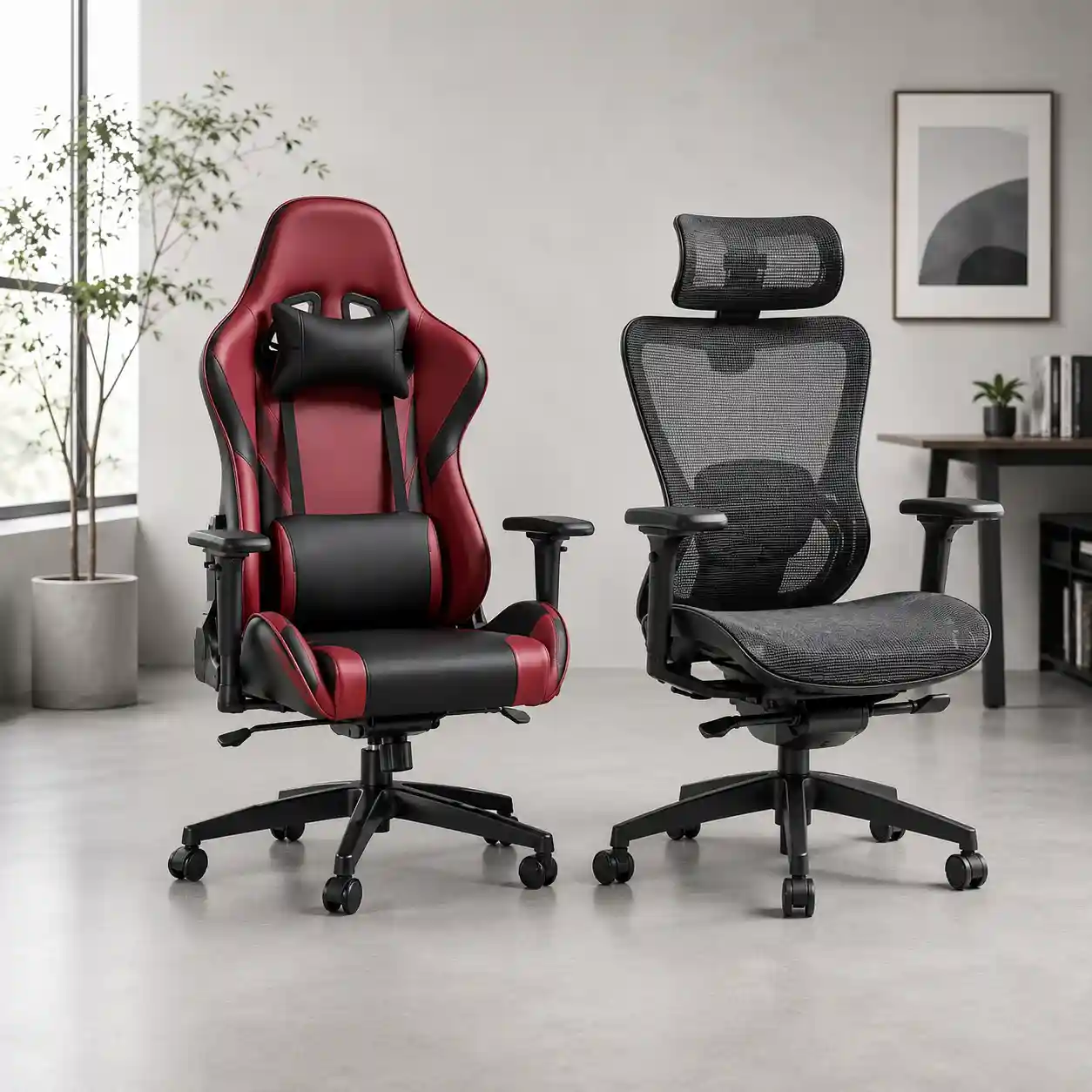
A gaming chair is usually the better fit when buyers need a strong visual identity, deep recline, padded support, and retail appeal. An ergonomic chair is often better when users prioritize breathable materials, seat-depth adjustment, and task-focused posture for a full workday. Neither label guarantees comfort. The right choice depends on body fit, lumbar contact, seat dimensions, armrest position, material, and how many hours the chair will be used.
This guide explains the differences that matter before buying or sourcing. For a broader procurement checklist, read our wholesale gaming chair buyer guide.
Why the Label Alone Is a Poor Buying Test
Many buyers compare a racing-style chair with a mesh office chair and assume the shape tells them which one is ergonomic. It does not. Ergonomics comes from fit and adjustment: the lower back needs contact with the backrest, the seat should support the thighs without pressing behind the knees, and the armrests should let the shoulders relax.
The US Occupational Safety and Health Administration recommends adjustable back support, suitable seat depth, supportive armrests, and a stable five-leg base. It also notes that even a well-adjusted chair cannot make prolonged, motionless sitting healthy. Users still need to change position and stand periodically.

What gaming chairs usually prioritize
Gaming chairs commonly use a high back, side wings, foam padding, head and lumbar cushions, adjustable armrests, rocking, and a larger recline range. These features work well for gaming rooms, streamers, internet cafes, e-commerce listings, and buyers who want a visible product identity.
The weakness appears when appearance gets more attention than seat fit. Narrow side wings, a misplaced lumbar pillow, hard foam, or armrests that cannot align with the desk can make a good-looking chair uncomfortable.
What ergonomic office chairs usually prioritize
Ergonomic task chairs often use mesh or flexible back structures, adjustable lumbar support, seat-depth adjustment, synchronized tilt, and cleaner styling. They are easier to position in offices and hybrid workspaces where users sit upright for keyboard and screen work.
They are not automatically better. A fixed mesh curve can miss the user’s lumbar area, a shallow seat can undersupport taller users, and low-cost mechanisms can feel unstable. Buyers still need specifications and a sitting test.
Gaming Chair vs Ergonomic Chair Comparison
| Decision Point | Gaming Chair | Ergonomic Chair | Buyer Check |
|---|
| Visual style | Bold colors and racing profile | Quiet office appearance | Match the sales channel |
| Lumbar support | Pillow, built-in, or adjustable system | Fixed, adjustable, or self-adaptive support | Check height and depth of contact |
| Seat feel | Usually padded foam | Foam, mesh, or hybrid | Test pressure after 30 to 60 minutes |
| Recline | Often a wider leisure range | Usually task-oriented tilt | Check lock positions and stability |
| Material | PU, PVC, fabric, or mixed panels | Mesh, fabric, foam, or leather | Match climate and cleaning needs |
| Best fit | Gaming, streaming, retail, esports | Office, study, shared workstations | Start with the real use case |
Which Chair Is Better for Long Sitting?
For long sitting, adjustability matters more than the category name. Buyers should compare seat height, effective seat depth, seat width, backrest curve, lumbar height, armrest range, tilt resistance, and recommended body size. A chair that fits one person can be wrong for another.
Lumbar support should follow the user
A loose pillow can move out of position. A fixed lumbar curve can be too high or too low. An adjustable or adaptive system covers more body types, but only when its range is useful and the mechanism remains stable. Read our guide to linkage armrest ergonomic gaming chairs when comparing visible functional differences for retail programs.

Seat depth is easy to overlook
The user should be able to sit against the backrest without the front edge pressing into the back of the knees. A deep seat may be uncomfortable for shorter users. A shallow seat may leave taller users with too little thigh support. For bulk orders, ask for seat dimensions and recommended user ranges instead of relying on “universal size.”
Movement still matters
Recline and rocking can help users change posture, but a large recline angle is not proof of good ergonomics. Check how the chair supports the pelvis and lower back in upright, slightly reclined, and relaxed positions. The mechanism should move smoothly and lock without unwanted play.
Which Type Fits Different Buyer Scenarios?
For internet cafes and gaming venues, durability, cleanability, replaceable parts, and carton efficiency may matter more than a long feature list. A model such as the FT-7009 professional esports gaming chair gives buyers a clearer venue-oriented reference point.
For home office and gaming crossover markets, a cleaner silhouette and balanced adjustment package can reach a wider audience. Compare the FT-1206 office-friendly PC gaming chair with more traditional racing-style models.
For price-sensitive e-commerce programs, buyers should define which adjustments customers truly use. The FT-011 budget gaming chair shows how an entry model can be positioned without claiming premium functions it does not have.
A B2B Sample Test Before Bulk Orders
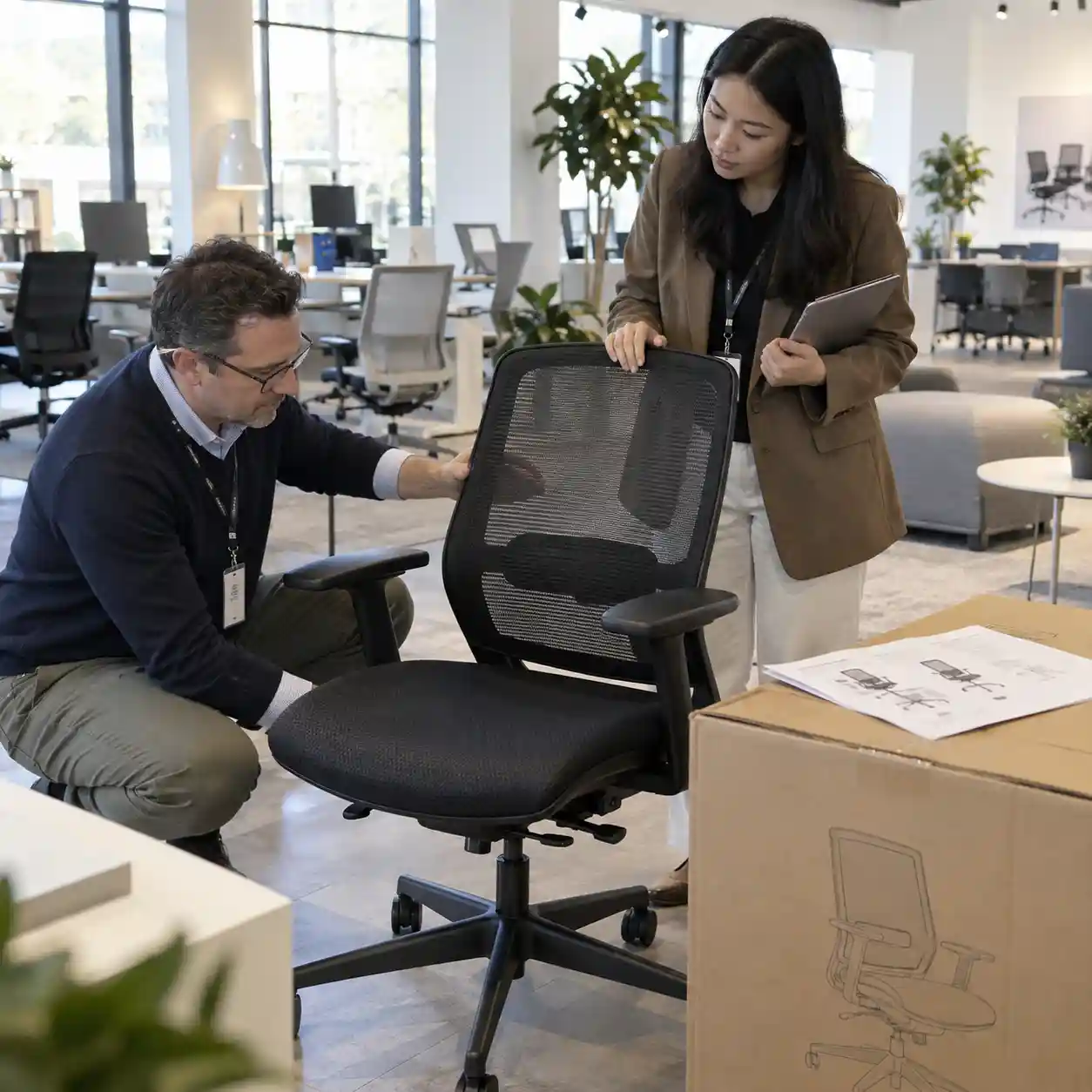
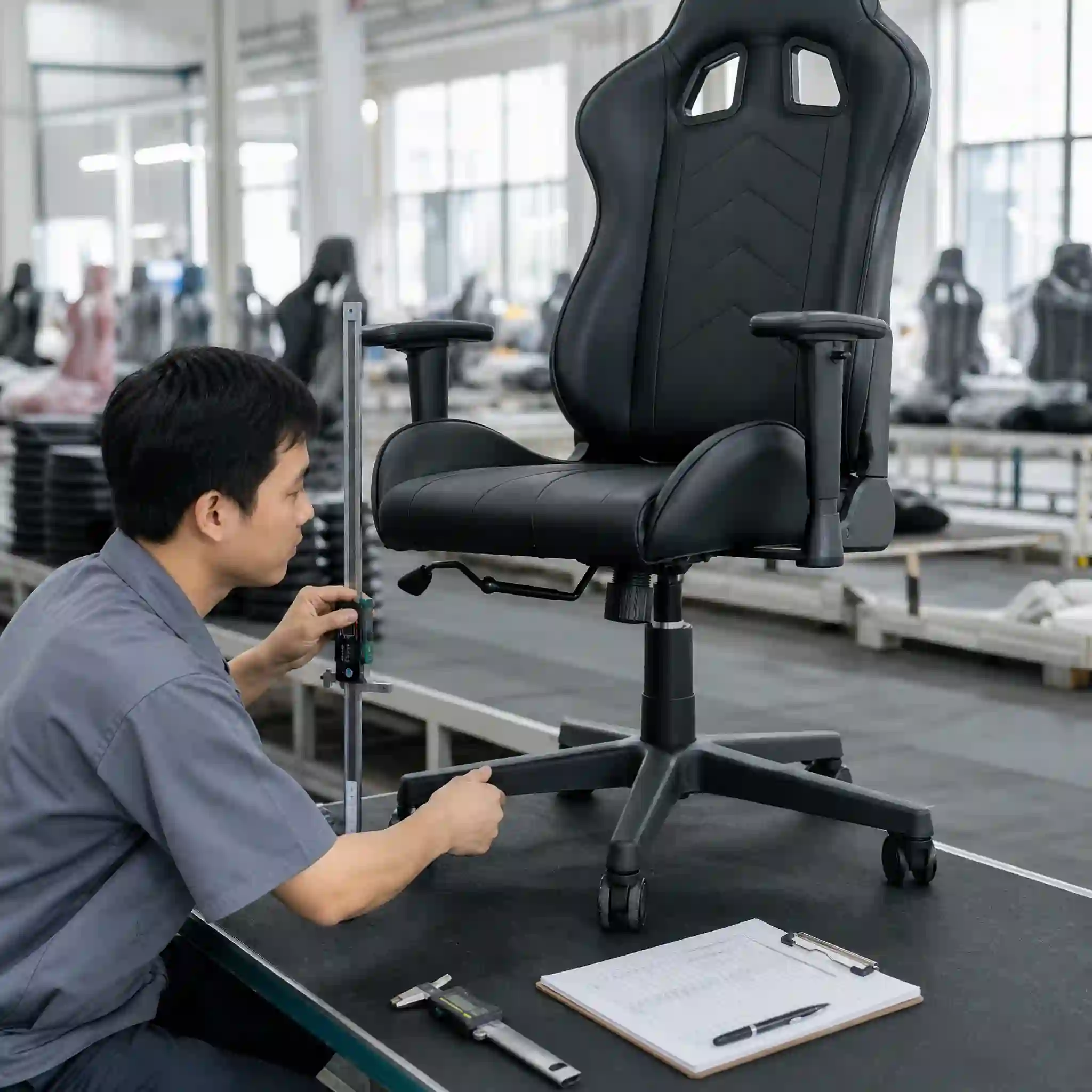
Ask at least three people with different heights to sit in the sample. Test upright work, keyboard use, relaxed gaming, recline, armrest alignment, and entry and exit. Record where the lumbar support contacts the back and whether the seat edge creates pressure.
- Measure seat width, usable seat depth, backrest height, and armrest range.
- Check foam recovery, upholstery tension, stitching, and heat buildup.
- Repeat height, tilt, recline, and armrest adjustments.
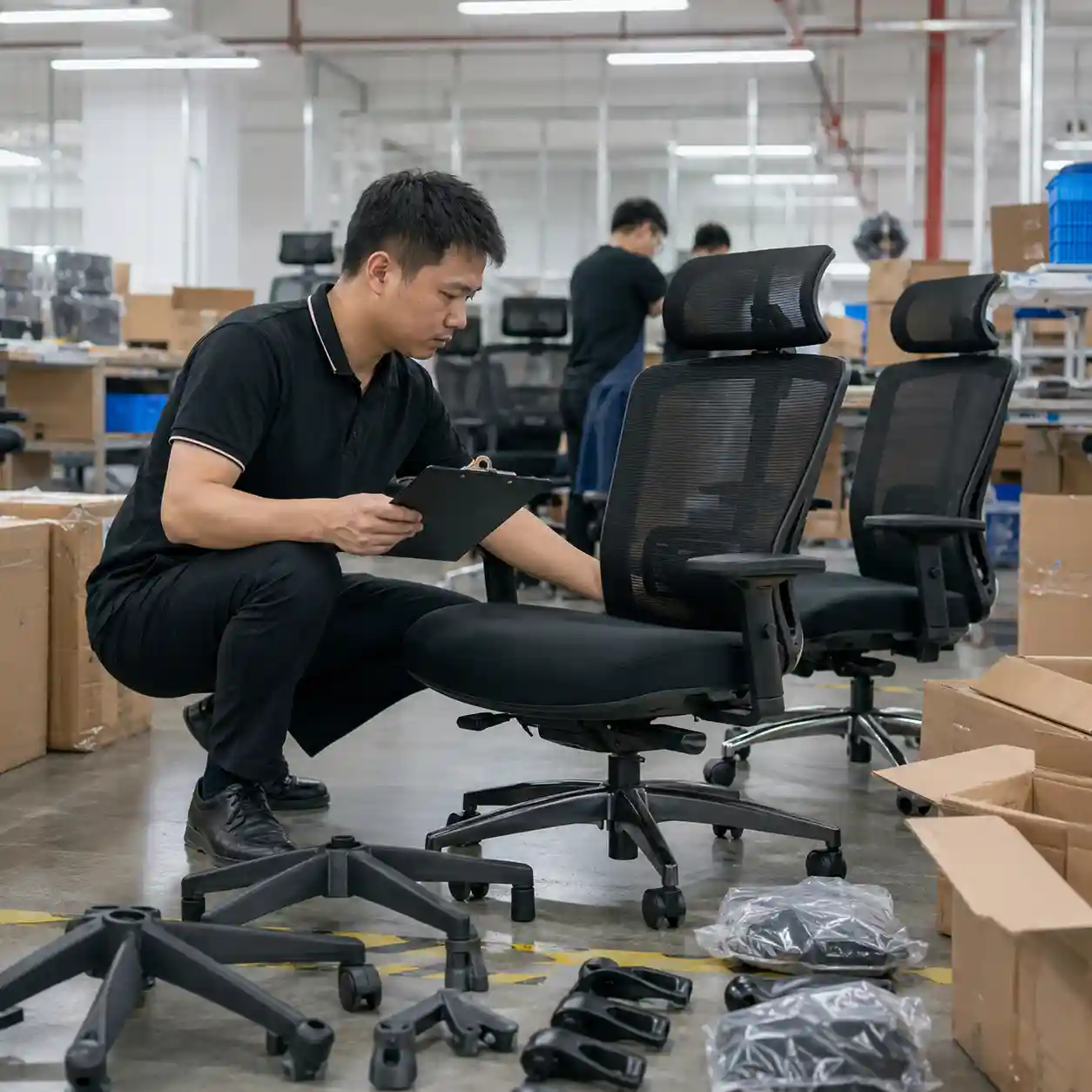
- Inspect base stability, casters, gas lift, mechanism, and screw fit.
- Confirm spare parts and packaging before approving mass production.
Consumer complaints can help turn this test into a practical inspection plan. See the eight gaming chair quality issues buyers should check.

How Hengyao Supports Model Selection
Hengyao Chair manufactures gaming chairs in Anji County, Huzhou City, Zhejiang Province, China. For OEM and wholesale projects, buyers can compare structures, upholstery choices, armrest types, recline functions, branding, carton requirements, and target price levels before sample confirmation.
The useful question is not “Which chair wins?” It is “Which chair fits this user, sales channel, and quality target?” Browse the wholesale gaming chair collection, then send your target market, price level, quantity, and required functions through the OEM gaming chair inquiry form.
FAQ
Are ergonomic chairs always better than gaming chairs?
No. Fit, adjustment range, materials, and build quality matter more than the label. Some gaming chairs provide useful lumbar and recline adjustments, while some low-cost ergonomic chairs have limited support.
Can a gaming chair be used for office work?
Yes, if the seat depth, lumbar position, armrests, and desk height fit the user. Cleaner hybrid models are often easier to place in home offices.
Which chair is better for back discomfort?
Choose a chair that supports the lower back and allows posture changes. A chair is not a medical treatment. Persistent pain should be discussed with a qualified health professional.
What should wholesale buyers test first?
Start with body fit, lumbar contact, seat pressure, armrest alignment, mechanism stability, and repeated function tests before comparing decorative features.
Sources and Next Step
Ergonomic guidance: OSHA Computer Workstation Chairs. Product selection should still be confirmed through samples and market-specific requirements.
For an OEM recommendation, request model options, MOQ, and sample information from Hengyao Chair.



 English